May 27, 2026
George Kruger Gray Artist, Engraver & Designer of Jersey Coinage, 1923–1952
25 December 1880 — 2 May 1943 · CBE · Royal College of Art · Preferred Contractor, Royal Mint
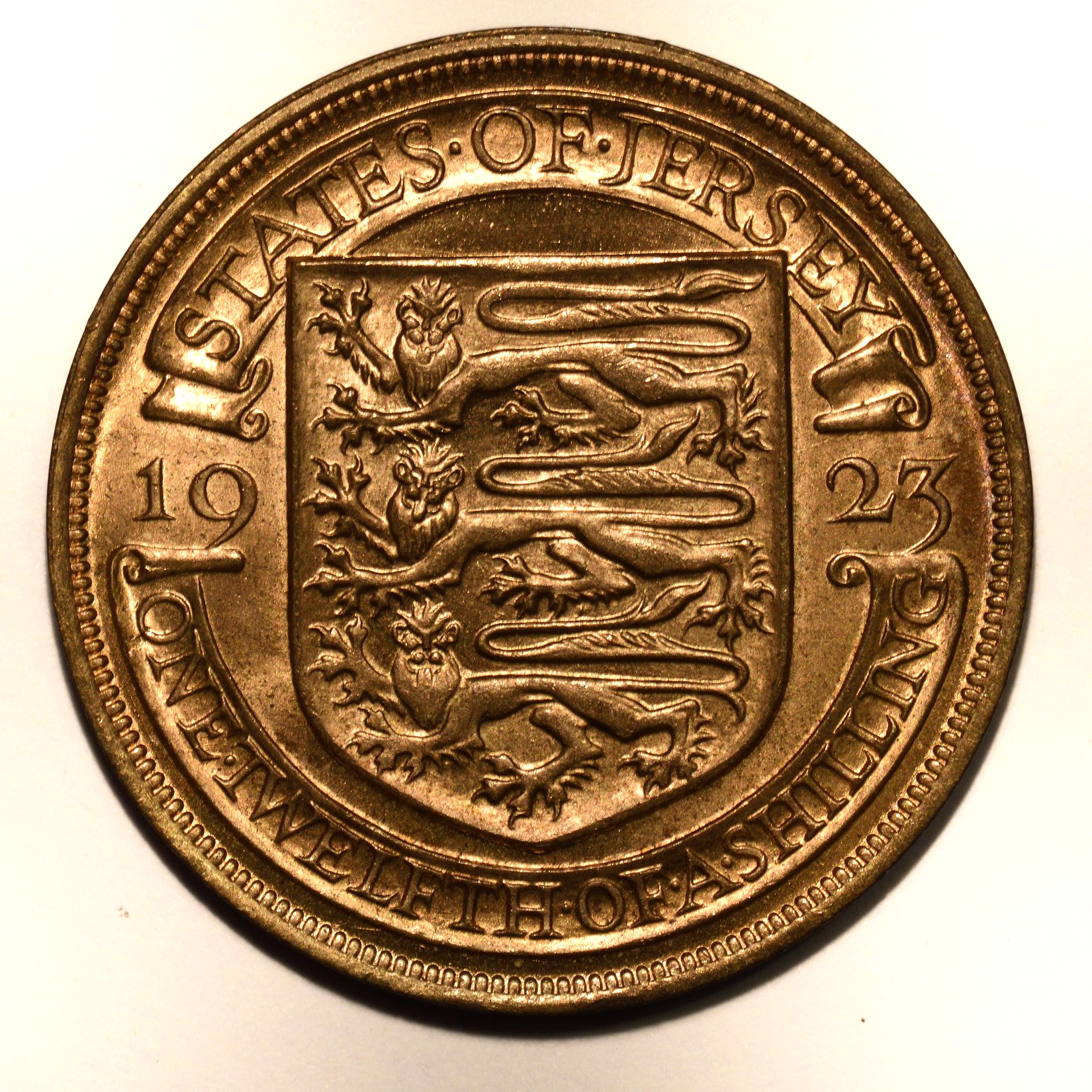
George V, 1923
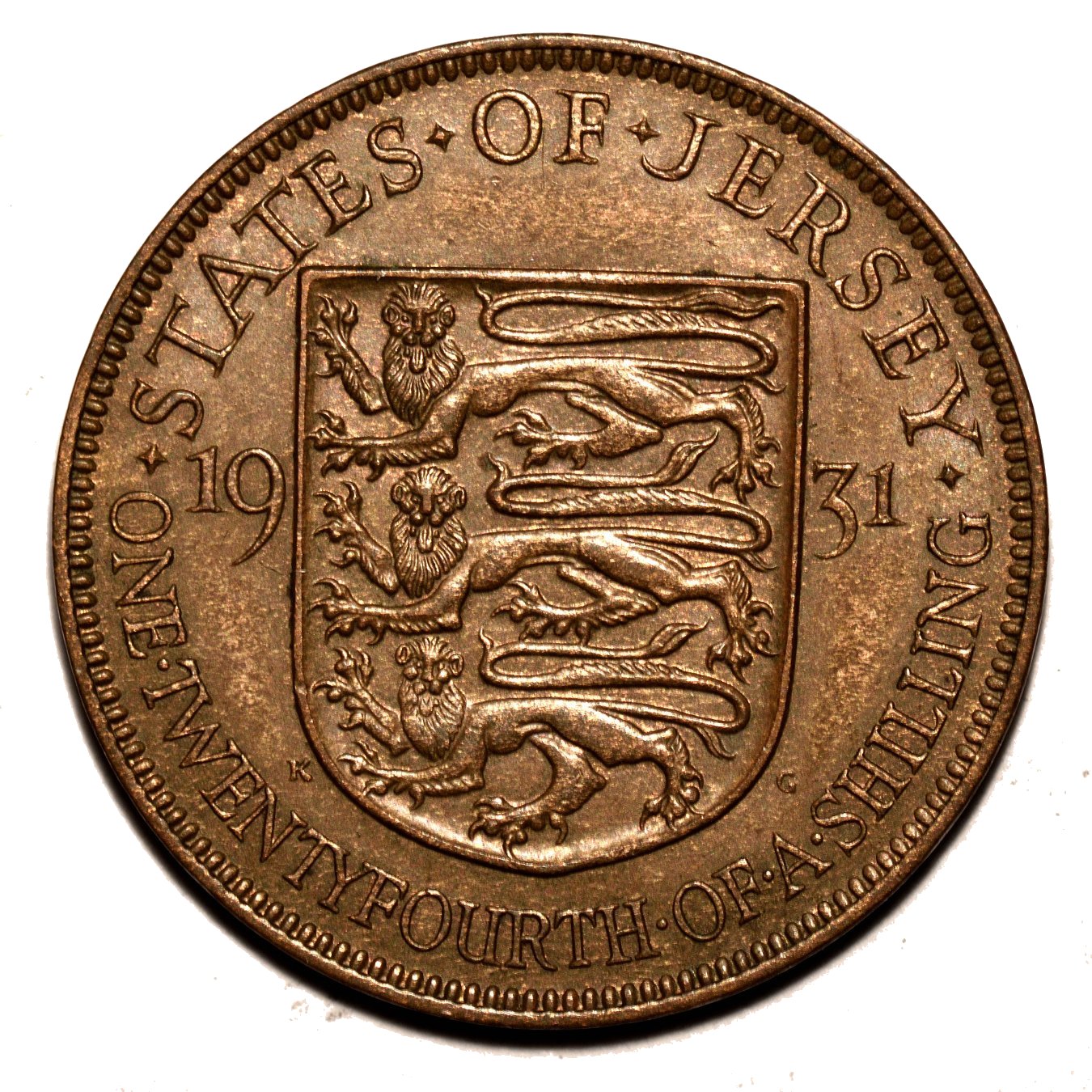
George V, 1931
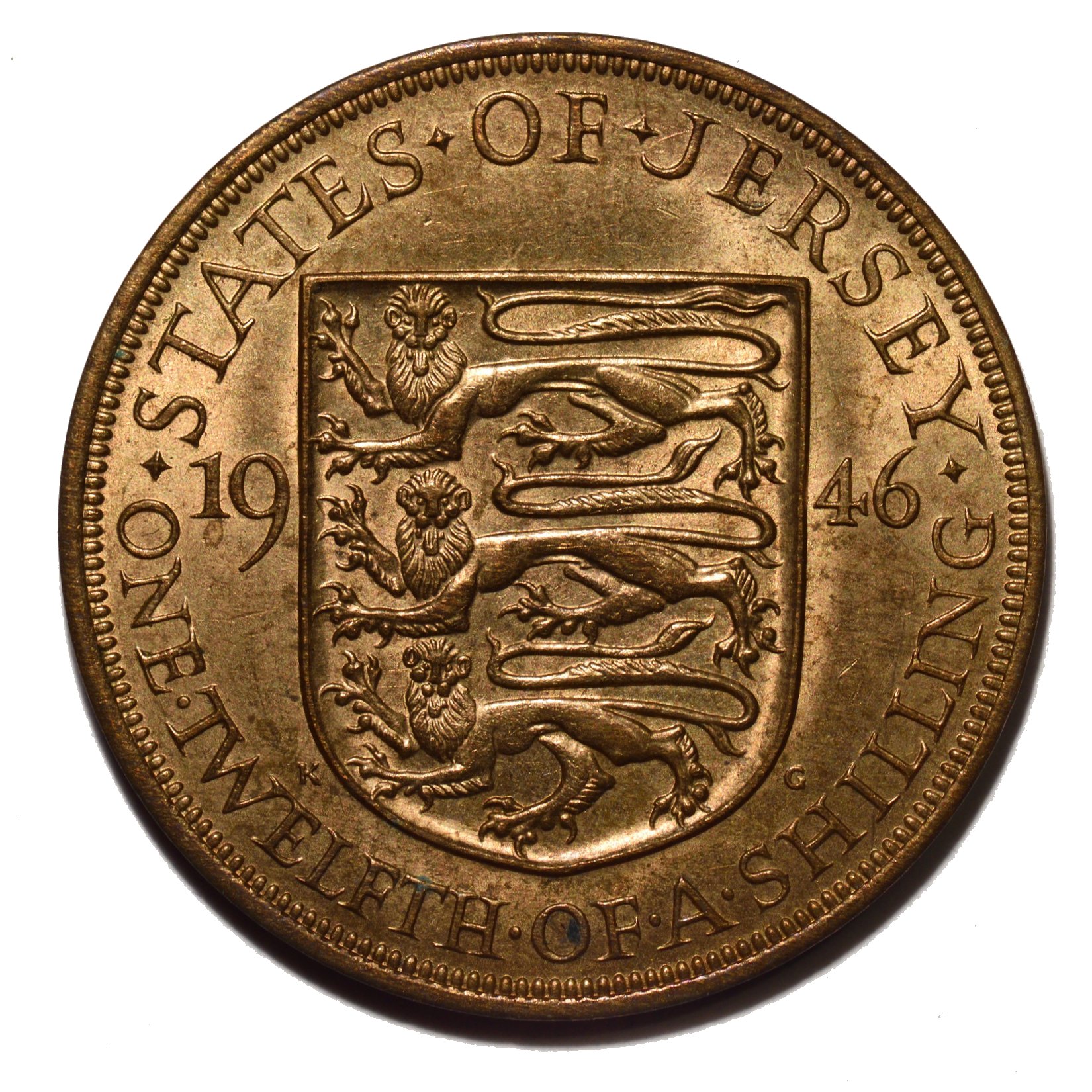
George VI, 1946
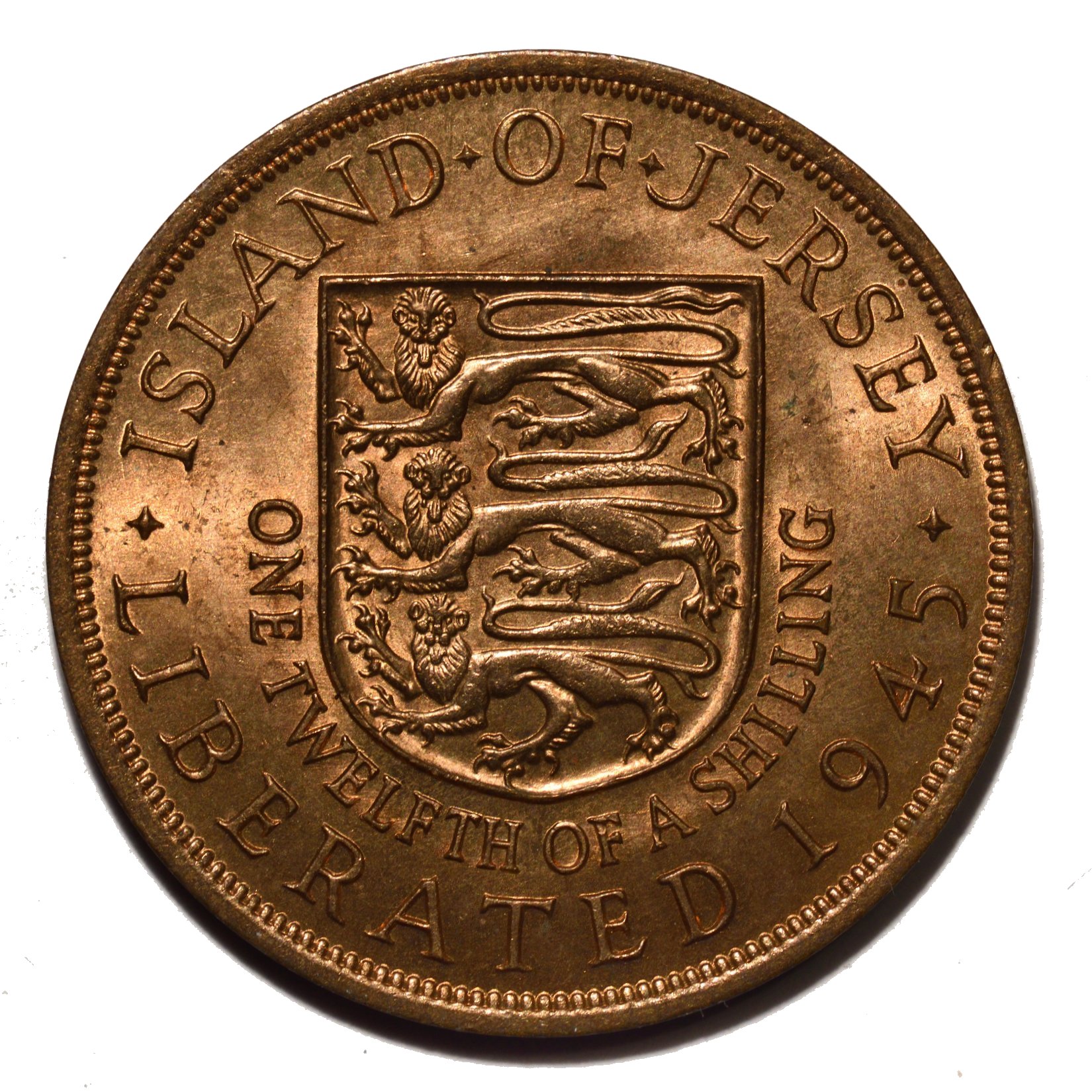
1/12 Shilling, 1949
Life & Training
Jersey Coins
Design Detail
Empire Coinage
Stained Glass
Legacy
| Phase | Date / Place | Event & Notes |
|---|---|---|
| Life & Training | ||
| Life | 25 Dec 1880 Kensington, London |
Born George Edward Kruger to a Jersey merchant family. His father's Channel Island roots gave him a lifelong connection to Jersey — the island whose coins he would later design. One source places his birth in St Helier, Jersey; another at 126 Kensington Park Road, London. His father was a Jersey merchant who had moved to England. |
| Life | c. 1885 Liverpool |
Family relocates to Liverpool. Attends Merchant Taylors' Boys' School, Crosby. In July 1893 he is dramatically rescued from Crosby Beach during a tragic incident involving other schoolboys. |
| Life | c. 1898–1905 Bath / London |
Studies at the Bath School of Art, where he earns a scholarship to the Royal College of Art, London. Graduates with a Diploma in Design in his birth name, George Edward Kruger. The Bath School of Art is today part of Bath Spa University. |
| Life | 1914–1918 France / England |
Serves with the Artists' Rifles during the First World War, then transfers to a camouflage unit of the Royal Engineers. The work — pattern, concealment, visual perception — sharpens instincts well suited to small-surface coin design. |
| Life | 1918 England |
Marries Frances Audrey Gordon Gray and adopts her surname. Henceforth known as George Kruger Gray. They have a son, Douglas, in October 1920. |
| Life | 1922 London W.14 |
Living at No. 5, St Paul's Studios, Talgarth Road — purpose-built artist studios whose alumni include Sir Edward Burne-Jones and William Logsdail. |
| Life | 1923 London |
Exhibits numismatic works at the Royal Academy of Arts. The show wins him a considerable reputation and establishes him as a preferred contractor for the Royal Mint. This same year, his reverse design first appears on Jersey coinage. |
| Life | 1938 | Appointed Commander of the Most Excellent Order of the British Empire (CBE) for services to British art and design. |
| Life | 2 May 1943 Chichester |
Dies at Chichester, West Sussex. Buried in the churchyard of St Mary, Fittleworth. |
| Jersey Coinage — Designs & Issues | ||
| Jersey | 1/12 Shilling George V, 1923 |
First Jersey coin bearing his design. Reverse: the Arms of Jersey — three golden lions passant on a red shield — divides the date, with States of Jersey arching above and One Twelfth of a Shilling below. His initials K G appear in the field. Struck at Royal Mint, Tower Hill, London. The order to manufacture punches for the new reverse was issued to Kruger Gray on 17 January 1924 (Royal Mint file R.854/24). Col. R. A. Johnson enclosed a coin as a personal gift to the designer. |
| Jersey | 1/24 Shilling George V, 1931 |
Half-penny denomination using the same heraldic scheme: shield divides date, legend above and denomination below. Struck in bronze at the Royal Mint. Jersey's unusual fractional-shilling system — 12 pence to the shilling but denominated as fractions rather than as pence — demanded a distinct reverse; Kruger Gray's heraldic solution served the series across multiple reigns. |
| Jersey | 1/12 & 1/24 Shilling George VI, 1937, 1946, 1947 |
Kruger Gray's reverse design carried forward unchanged into the new reign. His K G initials remain visible. The obverse — a crowned head only, without full coronation regalia — was designed by Percy Metcalfe, CVO. Jersey used the lower-relief (second type) effigy in 1937, more suitable for bronze. Three Acts of the States authorised successive £3,000 bronze coin issues: February 1936 (first £1,000 struck 1937; second batch June 1946; balance 1947). |
| Jersey | 1/12 Shilling — Liberation George VI, 1949, 1950, 1952 |
Jersey's first commemorative coin: issued to mark the island's liberation from German occupation on 8 May 1945. Reverse legend reads Island of Jersey / One Twelfth of a Shilling / Liberated 1945. Initiated at the suggestion of J. Wilfrid du Pré of the Société Jersiaise. Kruger Gray had died in 1943, but his shield design — adapted to carry the Liberation legend — served as the vehicle for this memorial issue. |
| Jersey | 1/12 Shilling — Liberation Elizabeth II, 1954 |
Commemorates 1945 but struck in 1954 (the coin itself is undated). Arms of Jersey: three lions passant; legend Island of Jersey / One Twelfth of a Shilling / Liberated 1945. Kruger Gray's design continues posthumously into the new reign. |
| Jersey | 1/12 & 1/4 Shilling Elizabeth II, 1957, 1960 |
An adaptation of Kruger Gray's 1931 shield design, with the legend changed to Bailiwick of Jersey. Struck in nickel-brass with a plain edge. The 1/4 shilling was legal tender for payments up to two shillings. Authorised by the Coinage Acts of 1957 and 1961. The reverse is described as "a slight modification of Mr. Kruger Gray's design of 1931" (jerseycoins.com). |
| Jersey | 1/12 Shilling Elizabeth II, 1964 |
Final pre-decimal issue bearing Kruger Gray's reverse: shield above written value; legend Bailiwick of Jersey / One Twelfth of a Shilling. His design spanned the coinage of three monarchs across four decades. |
| The Design — Heraldry in Miniature | ||
| Design | The Shield | The Arms of Jersey — Gules, three lions passant guardant in pale Or — are the same three golden leopards that appear in the royal arms of England. Rendering them legibly on a bronze coin no larger than a modern penny demanded extreme economy of line. Kruger Gray achieved this by simplifying the lions into stacked, bold heraldic forms without sacrificing their identity. |
| Design | The Composition | The shield anchors the entire reverse. The date is split either side of it (19 left, year-digits right), the denomination spelled out in a curved legend below, the island name arching above. Every element serves the shield. The result is architecturally clear — instantly legible, unmistakably heraldic. |
| Design | The Signature | Kruger Gray signed his work K G, and sometimes used a krug (the German word for a jug) as a secondary mark. On Jersey coins the initials appear discreetly in the field — present but never intrusive, like a mason's mark on a cathedral stone. On George VI issues they are particularly prominent alongside the date split. |
| Empire & Commonwealth Coinage — Selected Issues | ||
| Empire | Great Britain | Threepence (1927–1945), sixpence (1927–1948), shilling — both English and Scottish designs (1927–1948), florin (1927–1948), half crown (1927–1948), crown (1927–1936; 1937). The 1927 dates were proof specimens only. |
| Empire | Australia | The complete second set: halfpenny, penny, threepence, shilling, florin and crown — used from 1937 until decimalisation in 1966. Also the commemorative florins of 1927 and 1935. The sixpence alone did not change design. |
| Empire | Canada | One cent (1937–2012), five cents / nickel (1937 to the present day), and 50-cent coins (1937–1958). The maple-leaf penny reverse survived for 75 years. |
| Empire | New Zealand | Threepence (crossed patu), sixpence (huia bird), shilling (Māori warrior with taiaha), florin (kiwi), half crown — 1933–1965. The designs were celebrated for their indigenous character and remain among the most admired Commonwealth coin reverses of the 20th century. |
| Empire | South Africa | Farthing, halfpenny, penny, threepence, sixpence, shilling, florin, and half crown — 1923–1960. A near-complete coinage spanning nearly four decades. |
| Empire | Mauritius, Cyprus, others | Mauritius: 1 cent, 2 cents, 5 cents, 10 cents, ¼, ½ and 1 rupee (1937–1978; some designs still in use in the 21st century). Cyprus: 9 and 18 piastres (1938–1940), 45 and 4½ piastres (1928), florin (1947–1949). Also: Bermuda, Rhodesia, New Guinea, and more. |
| Stained Glass & Other Arts | ||
| Glass | Churches & Colleges | Although coins are his most pervasive legacy, Kruger Gray designed and made stained glass windows for churches, university chapels, and similar institutions across Britain — works demanding colour, narrative, and technical mastery entirely different from numismatic design. |
| Glass | Books & Posters | He illustrated books, produced posters and cartoons, and worked in watercolour, capturing landscapes and portraits. His 1923 Royal Academy exhibition included work across all these disciplines alongside his numismatic pieces. |
| Legacy | ||
| Legacy | Scope | Kruger Gray designed reverses for coins circulating across at least a dozen territories. At any given moment in the 1940s, his work passed through the hands of tens of millions of people on several continents — yet his name was unknown to almost all of them. He worked in the tradition of the anonymous craftsman: the K G mark was there for those who looked, and invisible to everyone else. |
| Legacy | Jersey Connection | Of all the territories whose coinage he shaped, Jersey holds a particular resonance: it was his father's island. His reverse design first appeared on Jersey coins in 1923 and — in adapted form — was still being struck after his death, into the early years of the decimal era. No other designer's work has served Jersey coinage so continuously. The 1964 Elizabeth II 1/12 shilling is the last Jersey coin whose reverse is attributed to Kruger Gray by the Royal Mint and numismatic catalogues. |