British Threepence — Edward VII — 1902–1910 Complete Series Guide — All Nine Dates — The Thruppenny Bit — Maundy Money Context
KM# 797.1 (1902–04) & KM# 797.2 (1904–10) · S.3984 · ESC 2115–2123 · Silver .925 (Sterling) · 16.0 mm · 1.414 g · Reeded edge · ASW 0.0421 troy oz
The Threepence, Maundy Money, and the Christmas Pudding
The Edwardian threepence occupies a unique cultural space among British coins. It was simultaneously a circulation coin (the smallest silver denomination in regular use), a Maundy denomination (the Royal Maundy ceremony distributes threepences, twopences, pennies, and fourpences annually to elderly recipients on Maundy Thursday), and the traditional Christmas pudding coin — a silver threepence wrapped in greaseproof paper and concealed inside the pudding, to bring good luck to whoever finds it in their portion. The same coin passed through the hands of costermongers, church charities, and children reaching into Christmas puddings with equal democratic anonymity.
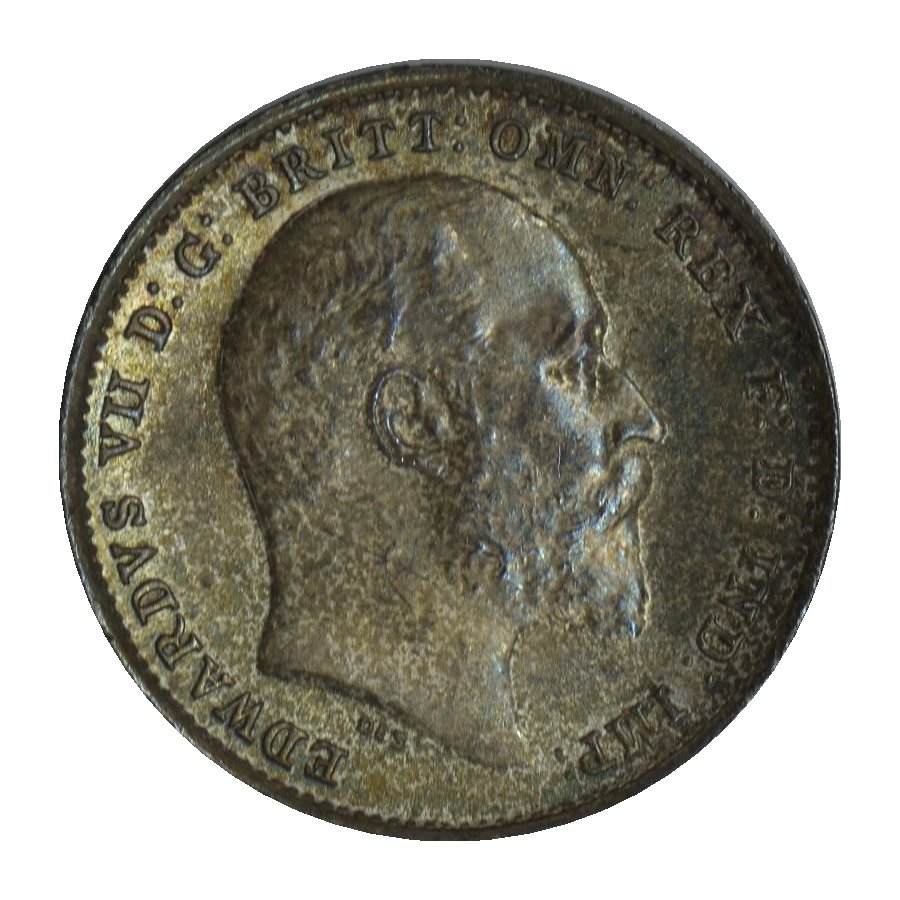
Edward VII — de Saulles
DES below truncation
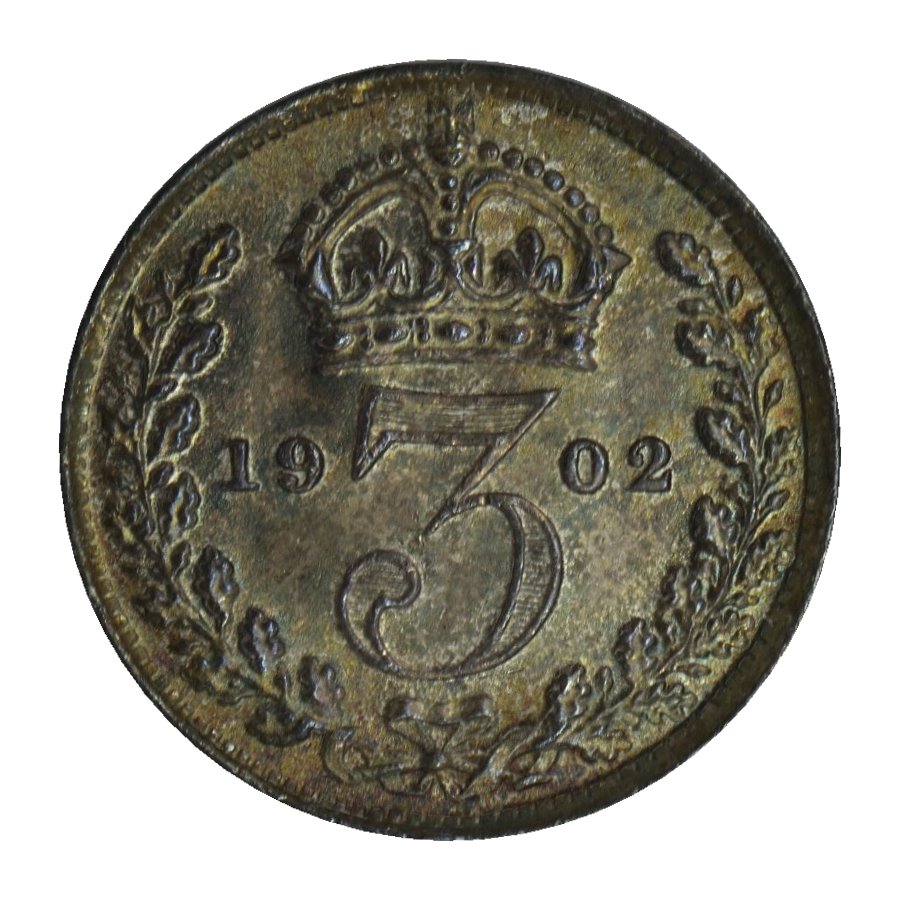
Crown / 3 / date within wreath
Oak leaves, tied bow
Two Sub-Types: KM#797.1 and KM#797.2 — The Numeral 3 Varieties
The variety distinction is subtle and requires comparison with reference images or side-by-side examination. Most dealers and catalogue references list 1902–03 as KM#797.1 and 1905–10 as KM#797.2; 1904 exists in both. See Tony Clayton's coins-of-the-uk.co.uk and Numista entry #9537 for detailed die comparison images.
| Section | Topic | Notes | ||||||||||||||||||||||||||||||||||||||||||||||||||||||||||||||||||||||
|---|---|---|---|---|---|---|---|---|---|---|---|---|---|---|---|---|---|---|---|---|---|---|---|---|---|---|---|---|---|---|---|---|---|---|---|---|---|---|---|---|---|---|---|---|---|---|---|---|---|---|---|---|---|---|---|---|---|---|---|---|---|---|---|---|---|---|---|---|---|---|---|---|
| History & Context | ||||||||||||||||||||||||||||||||||||||||||||||||||||||||||||||||||||||||
| History | The Threepence — The Thruppenny Bit |
The threepence — known colloquially as the thruppenny bit or joey (the latter name possibly deriving from Joseph Hume MP, who championed the coin's re-introduction in the 1830s) — was worth three pence, one quarter of a shilling, one eightieth of a pound. In Edwardian England, three pence would buy a quarter-pound of cheese, a small loaf, or a child's cinema seat. Small but useful, it was one of the most frequently handled silver coins of the period, tucked into pockets and used in small commerce daily. The silver threepence was first struck under Edward VI in 1551, the same year as the sixpence, and ran continuously until 1944 when it was replaced by the twelve-sided nickel-brass threepenny bit (introduced 1937). The silver version continued to be struck in parallel until 1944 primarily to supply the Christmas pudding market, which demanded the traditional silver coin rather than the base-metal replacement. | ||||||||||||||||||||||||||||||||||||||||||||||||||||||||||||||||||||||
| History | The Christmas Pudding Coin |
The practice of hiding a silver threepence in the Christmas pudding — to bring good luck to whoever found it in their portion — was one of the most deeply embedded popular customs of Victorian and Edwardian England. The coin had to be silver (copper was considered unsuitable), small enough not to be dangerous, and legal tender. The threepence was perfect on all counts. Families often preserved a set of threepences specifically for this purpose, polishing them before the pudding was made. The Royal Mint was aware of this demand and it influenced threepence production scheduling. The Christmas pudding tradition created a sustained demand for bright, attractive threepences quite separately from commercial circulation needs. It is one of the reasons that Edwardian threepences survive in relatively high grades more often than their small size and circulation use would suggest — some were kept from year to year purely as pudding coins. | ||||||||||||||||||||||||||||||||||||||||||||||||||||||||||||||||||||||
| History | Sterling Silver & the 1920 Change |
Like the sixpence and shilling, the Edwardian threepence was struck in .925 sterling silver — the standard for British coinage since the 13th century. In 1920 the silver content was reduced to .500 (half silver, half copper alloy) as part of the post-WWI economic reorganisation. The visual difference is subtle: .925 silver is bright and silvery; .500 silver is slightly duller and yellower on close inspection. Pre-1920 threepences — including all Edward VII issues — are therefore the last of the full-sterling series. | ||||||||||||||||||||||||||||||||||||||||||||||||||||||||||||||||||||||
| Design | ||||||||||||||||||||||||||||||||||||||||||||||||||||||||||||||||||||||||
| Design | Obverse | The same bare-headed right-facing portrait of Edward VII by George William de Saulles that appears on the sixpence and shilling — scaled to fit the threepence's much smaller 16mm diameter. The legend reads EDWARDVS VII D:G: BRITT: OMN: REX F:D: IND: IMP: (Edward the Seventh, by the Grace of God, King of all the Britains, Defender of the Faith, Emperor of India). Below the truncation: DES — de Saulles's signature, very small but visible under magnification on well-preserved examples. Scaling the portrait to 16mm is a significant challenge. On the threepence, the portrait is reduced to its essentials — the distinctive hook nose, the beard, the brow — and loses some of the fine collar and ear detail visible on the larger denominations. The DES signature is correspondingly smaller and harder to find. | ||||||||||||||||||||||||||||||||||||||||||||||||||||||||||||||||||||||
| Design | Reverse | A royal crown at the top of the field; below it, the numeral 3 in large, centred type; the date divided to either side of the numeral (e.g. 19 — 07). All enclosed within an oak leaf wreath tied with a bow at the base. The design is clean and legible — the crown, numeral, and date are immediately readable even on heavily worn specimens. The oak wreath, distinctive from the laurel used on the sixpence, carries traditional associations with the English monarchy and English liberty. | ||||||||||||||||||||||||||||||||||||||||||||||||||||||||||||||||||||||
| Design | The Numeral 3 Varieties |
The two sub-types (KM#797.1 and KM#797.2) are distinguished by slight differences in the shape of the central numeral 3 on the reverse — variations in what numismatists call the 'nose' (upper arm), 'tail' (lower serif), and 'oblique' (diagonal centre stroke) of the figure. These are die varieties introduced during the series, not design changes; the overall composition is identical. Most collectors treat the whole series as one type for set-building purposes; specialists note the sub-type on individual specimens. The 1904 year is the transition point: some 1904 pieces carry the KM#797.1 numeral 3, others the KM#797.2. Identifying which you have requires comparison against reference images — the varieties are described in detail by Tony Clayton at coins-of-the-uk.co.uk and documented on Numista entry #9537. | ||||||||||||||||||||||||||||||||||||||||||||||||||||||||||||||||||||||
| Design | Physical Character | At 16mm and 1.414g, the threepence is the smallest and lightest coin in the Edwardian silver series — about the diameter of a modern 5p but thicker and heavier for its size, giving it a distinct "chunky button" quality. On the hand it is instantly recognisable; in a pocket full of coins it tends to sink to the bottom. The reeded edge is noticeably finer (more reeds per millimetre of circumference) than on the larger denominations, and can help authenticate a coin — contemporary forgeries often get the edge wrong. | ||||||||||||||||||||||||||||||||||||||||||||||||||||||||||||||||||||||
| Complete Series — All Nine Dates | ||||||||||||||||||||||||||||||||||||||||||||||||||||||||||||||||||||||||
| Series | Mintages & Values by Year |
|
||||||||||||||||||||||||||||||||||||||||||||||||||||||||||||||||||||||
| Maundy Money — The Prooflike Threepence | ||||||||||||||||||||||||||||||||||||||||||||||||||||||||||||||||||||||||
| Maundy | The Royal Maundy | Every year on Maundy Thursday (the Thursday before Easter), the Sovereign distributes special Maundy money to elderly recipients — one man and one woman for each year of the monarch's age. The gifts consist of sets of one penny, twopence, threepence, and fourpence pieces struck to the same design as the circulation coins but with a prooflike (mirror or satin) finish. These Maundy pieces are the same type as the currency coins (S.3987 for the prooflike version; S.3984 for the currency) and share the same KM numbers — they are distinguished by finish, not by design. The 1902 Maundy threepences were partly proof in character. A threepence found with a highly reflective, mirror-like surface — especially if accompanied by matching 1d, 2d, and 4d pieces — is likely a Maundy piece rather than a currency coin. The Maundy threepence is worth significantly more than the currency strike: the 1902 Maundy set (S.3985) catalogues at several hundred pounds in EF. | ||||||||||||||||||||||||||||||||||||||||||||||||||||||||||||||||||||||
| Maundy | Maundy Mintages by Year |
|
||||||||||||||||||||||||||||||||||||||||||||||||||||||||||||||||||||||
| Maundy | Currency vs Maundy: How to Tell the Difference |
The Maundy threepence and the currency threepence share the same design and KM number. The key distinction is surface quality: Maundy pieces have prooflike fields — mirror-bright backgrounds with frosted devices — while currency strikes have a normal business-strike finish (the fields may be somewhat reflective on fresh coins but not deeply mirrored). On worn examples the distinction becomes very difficult. Maundy threepences are most reliably identified when accompanied by the full Maundy set (1d, 2d, 3d, 4d), or when the prooflike surfaces survive undamaged. | ||||||||||||||||||||||||||||||||||||||||||||||||||||||||||||||||||||||
| Mint & Production | ||||||||||||||||||||||||||||||||||||||||||||||||||||||||||||||||||||||||
| Mint | Royal Mint, London |
All Edward VII threepences were struck at the Royal Mint, Tower Hill, London. No branch mint struck the threepence; no mint mark appears. The threepence was the smallest denomination struck in silver at the Mint in this period, and its small planchet required careful quality control — a coin that is 16mm in diameter allows very little tolerance for off-centre strikes or weak dies. Examples with well-centred, sharp strikes are noticeably more attractive than weakly struck pieces. | ||||||||||||||||||||||||||||||||||||||||||||||||||||||||||||||||||||||
| Mint | The 1904 Key Date | The 1904 circulation threepence (ESC 2118 — catalogued as Scarce by the English Silver Coinage reference) had a mintage of 3,627,360 — the lowest of the series. As with the 1904 sixpence and the 1905 shilling, the reason for the low production has not been definitively established; it reflects normal Royal Mint scheduling fluctuations based on Treasury demand forecasts. The 1904's scarcity is modest compared to the shilling's 1905 (488,390), but it is the definitive key date of the threepence series and values at EF and above reflect this. The ESC "Scarce" designation for the 1904 threepence is significant — the English Silver Coinage catalogues are conservative in their rarity designations and this label confirms the coin's status as genuinely harder to find in high grade. | ||||||||||||||||||||||||||||||||||||||||||||||||||||||||||||||||||||||
| Valuation — Grade Guide | ||||||||||||||||||||||||||||||||||||||||||||||||||||||||||||||||||||||||
| Value | Grade Guide: Common Dates vs 1904 |
|
||||||||||||||||||||||||||||||||||||||||||||||||||||||||||||||||||||||
| Value | Value Within the Edwardian Silver Set |
The threepence is by far the most affordable denomination in the Edwardian silver series. A complete set in VF (all nine dates, 1902–1910) costs approximately £80–120 total — the 1904 key date accounting for £15–35 of that, and the rest (eight dates) in VF averaging £5–15 each. Compare this with the shilling series where the 1905 key date alone costs £200–600 in VF. The threepence is therefore the most accessible complete Edwardian silver date set, and the ideal starting point for collectors new to the reign or working to a budget. | ||||||||||||||||||||||||||||||||||||||||||||||||||||||||||||||||||||||
| Collecting Notes | ||||||||||||||||||||||||||||||||||||||||||||||||||||||||||||||||||||||||
| Collect | Building the Complete Set |
A complete nine-date set in VF is realistic for under £120 total. The 1904 is the only date requiring any significant premium over circulated pocket-money prices. An EF set runs to approximately £400–600 total, with the 1904 (£60–90) and 1903 (£40–55) as the main cost items. Building this set alongside the sixpence and shilling series gives a compelling overview of de Saulles's Edwardian coinage at three denominations — the portrait is the same across all three, but the scale and reverse character are quite different. | ||||||||||||||||||||||||||||||||||||||||||||||||||||||||||||||||||||||
| Collect | What to Look For | Grading points: (1) Edward VII's portrait — scaled down, but the cheek, brow, and beard are still the highest-relief points; wear shows here first. (2) DES signature — very small on the threepence, below the portrait truncation; a loupe is needed to see it clearly; its presence confirms attribution. (3) The crown on the reverse — the arched band and orb wear quickly; sharp crown detail indicates EF. (4) The oak leaf outlines — individual leaf shapes should be distinct at EF; they merge in VF. (5) The numeral 3 — look for the nose/tail/oblique characteristics to attribute KM#797.1 vs 797.2 in the 1904 transition year. | ||||||||||||||||||||||||||||||||||||||||||||||||||||||||||||||||||||||
| Collect | Problems to Avoid | Common issues: (1) Cleaning — widespread in small silver; original sterling lustre has a warm glow; cleaned coins look harsh and flat. (2) Confusing Maundy with currency — a prooflike threepence has a mirror-field finish; do not price a currency coin as Maundy or vice versa. The reverse side: a Maundy coin passed off as a currency coin loses significant value; a currency coin priced as Maundy misleads the buyer. (3) Christmas pudding damage — coins used annually in puddings can show grease staining, food residue, or polishing marks from repeated cleaning before use; check under magnification. (4) Weak strikes — the small planchet means off-centre or weak strikes are relatively common; a slightly off-centre threepence is not unusual but reduces attractiveness. | ||||||||||||||||||||||||||||||||||||||||||||||||||||||||||||||||||||||
| Collect | Collection Contexts | The Edward VII threepence fits into: a complete nine-date set 1902–1910; a British threepence by monarch type set (Edward VI through Elizabeth II, covering 420 years); an Edwardian silver set (halfcrown, florin, shilling, sixpence, threepence — five denominations, all de Saulles portrait); a Maundy money complete set (1d, 2d, 3d, 4d for each year — the threepence is the central denomination of Maundy coinage); or a Christmas pudding history collection alongside related ephemera. The threepence also connects naturally with the companion sixpence and shilling series covered in this numismatic guide. | ||||||||||||||||||||||||||||||||||||||||||||||||||||||||||||||||||||||
| Collect | Related Coins | Immediate companions: the Edward VII sixpence 1902–1910 (KM#779 — same portrait, laurel wreath reverse, 19.3mm); the Edward VII shilling 1902–1910 (KM#800 — same portrait, lion-on-crown reverse, 23.5mm); the George V threepence 1911–1936 (same oak wreath reverse, Mackennal portrait); the Edward VII Maundy threepence (S.3987 — same design, prooflike finish, distributed annually at the Maundy ceremony); and the twelve-sided brass threepence 1937–1967 which eventually replaced the silver version. For the Jersey connection, de Saulles's Edward VII portrait appears on the Jersey 1/12 shilling (1909) — noted in the companion articles on this site. | ||||||||||||||||||||||||||||||||||||||||||||||||||||||||||||||||||||||
Sources: Spink Standard Catalogue of British Coins (S.3984, S.3985, S.3987) · Maurice Bull & Alan Rayner, English Silver Coinage Since 1649, 7th ed. — ESC 2115–2123 (ESC 2118 = 1904, Scarce) · Numista catalogue entry #9537 — KM#797.1/797.2 variety descriptions (nose/tail/oblique); Maundy mintage table · Dorset Coin Company — 1904 mintage 3,627,360; .925 silver; S.3984; crowned denomination within oak wreath · coinhunter.co.uk — 1904 mid-grade value ~£31 (Token Publishing Coin Yearbook 2022) · GBClassicCoins — 1904 Edward VII Silver Threepence "Scarce" ESC 2117 · allcoinvalues.com — date-by-date value ranges (1902 £0.60–£18; 1903 £1–£50; 1904 £1.50–£90; 1905/1906 £1–£65) · CoinTrust.co.uk — Edward VII threepence 1902–1910 (undated stock description)