British Half Crown — Edward VII — 1902–1910 The Half Crown — Silver — Britannia Standing — Complete Series Guide
KM# 800 · S.3978 · ESC 745–754 · Silver (0.925) · 32.3 mm · 14.14 g · Milled edge
George William de Saulles — Obverse Engraver (1862–1903)
The obverse portrait on all Edward VII silver coins — including the half crown — was the work of George William de Saulles, Chief Engraver at the Royal Mint from 1893 until his death in 1903. De Saulles modelled the portrait from a bust by the sculptor Emil Fuchs, producing a right-facing effigy of the King with the legend EDWARDVS VII DEI GRA BRITT OMN REX FID DEF IND IMP. Following de Saulles's death in 1903, his dies remained in use unchanged for the rest of the reign, meaning the portrait was not reworked mid-series. The initials DES appear below the truncation on silver denominations, as on bronze.
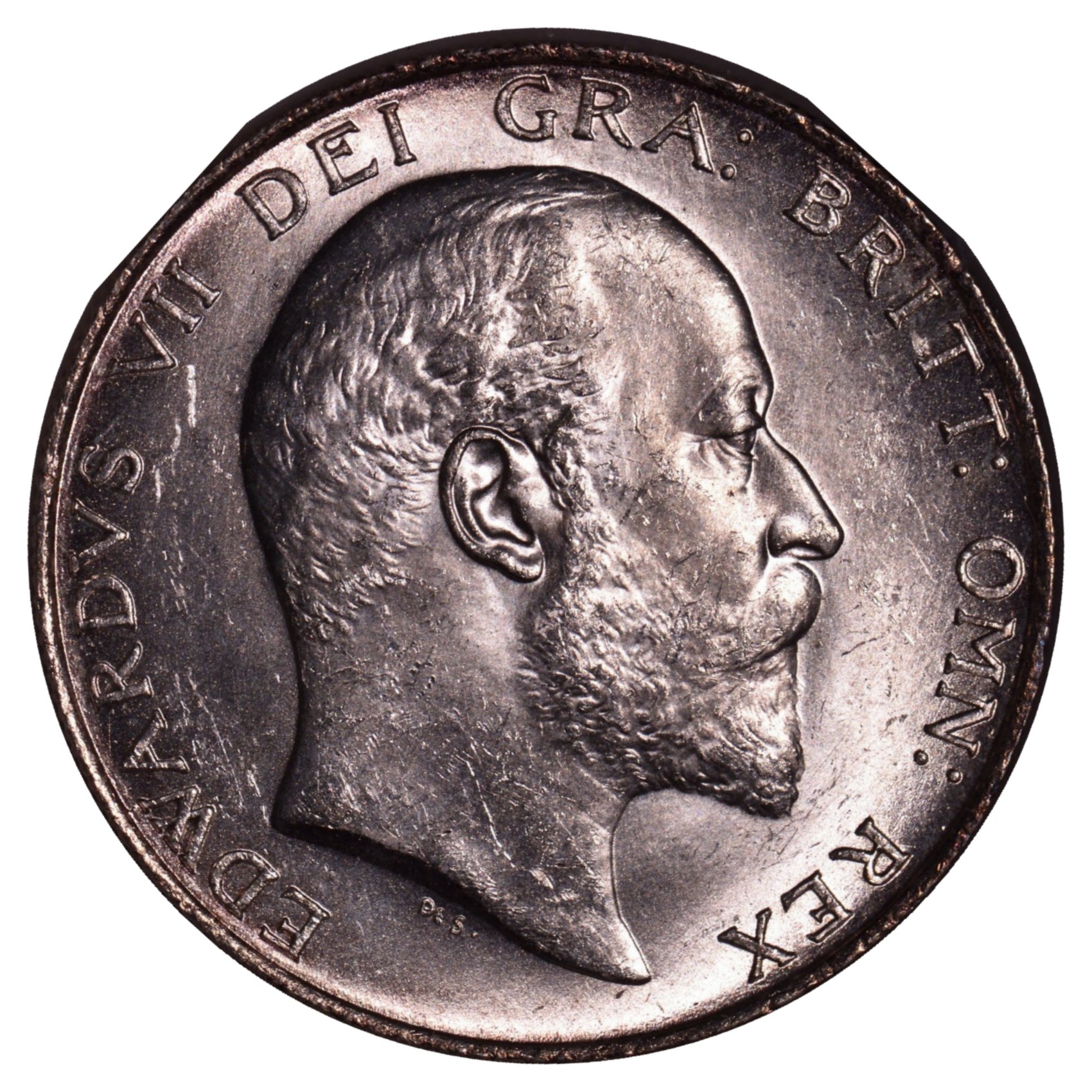
Edward VII — de Saulles
DES below truncation
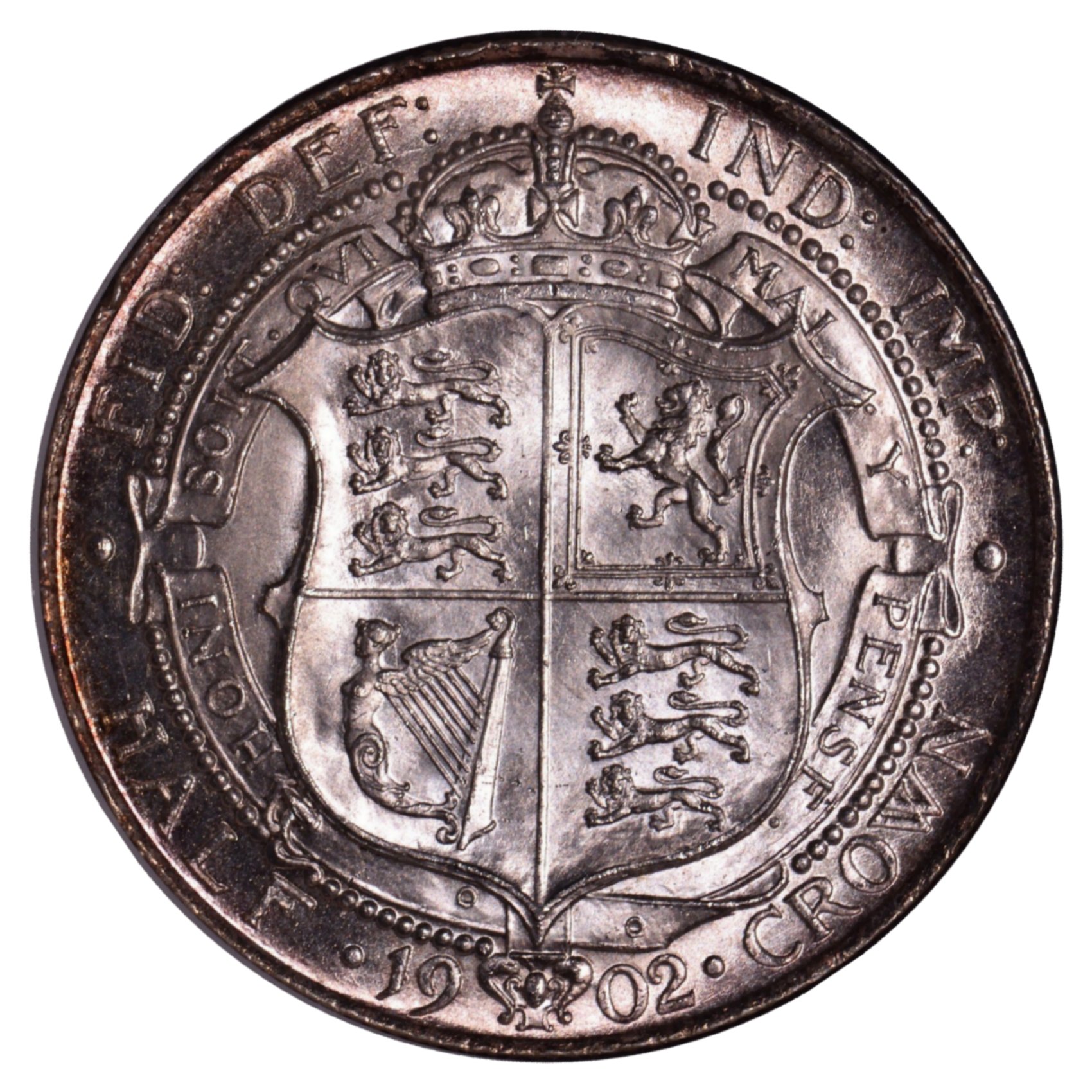
Crown / SIX PENCE / wreath
Merlen design
Known Die Varieties — 1902 Proof and Matt Proof Issues
Note: For the standard circulation half crowns of 1902–1910, no reverse die varieties of the significance of the halfpenny Low Tide/High Tide exist. The principal collecting distinctions within the series are: date scarcity (1905 is the key date), die axis alignment (medal vs coin alignment — minor), and proof/currency finish on the 1902 date. All dates share the same obverse and reverse type throughout the series.
| Section | Topic | Notes | ||||||||||||||||||||||||||||||||||||||||||||||||||||||||||||||||||||||||||||||||||||||||||
|---|---|---|---|---|---|---|---|---|---|---|---|---|---|---|---|---|---|---|---|---|---|---|---|---|---|---|---|---|---|---|---|---|---|---|---|---|---|---|---|---|---|---|---|---|---|---|---|---|---|---|---|---|---|---|---|---|---|---|---|---|---|---|---|---|---|---|---|---|---|---|---|---|---|---|---|---|---|---|---|---|---|---|---|---|---|---|---|---|---|---|---|---|
| History & Context | ||||||||||||||||||||||||||||||||||||||||||||||||||||||||||||||||||||||||||||||||||||||||||||
| History | The Half Crown — Two Shillings & Sixpence |
The half crown — two shillings and sixpence — was one of the most important and widely-used silver coins in Edwardian Britain. At 2s 6d, it was worth one-eighth of a pound, four times a sixpence, or half of a crown. In everyday commerce it was a substantial sum: a loaf of bread cost about 2d, a working man's daily wage might be around 3–4 shillings, and a half crown could pay for a music-hall seat, a Sunday dinner out, or several days of basic provisions. The half crown was the coin for significant but not extravagant transactions — cab fares, modest bets, wages for casual labour, the purchase of better cuts of meat. 2s 6d = 30 pence (pre-decimal) = 1/8 of a pound sterling. The half crown survived decimalisation uncertainty for decades — it was finally abolished and demonetised in 1970, one year before decimal day, as it had no convenient decimal equivalent. | ||||||||||||||||||||||||||||||||||||||||||||||||||||||||||||||||||||||||||||||||||||||||||
| History | Coronation Year — 1902 |
Edward VII's coronation took place on 9 August 1902, following the death of Queen Victoria on 22 January 1901 and a delay caused by the King's emergency appendix operation in June 1902. The 1902 half crown was therefore part of the first silver coinage issued under the new reign. The Royal Mint struck special Coronation proof sets in 1902, which included both brilliant proofs and distinctive matt (sand-blast) proofs. The 1902 proof half crown — particularly the matt proof — is among the most desirable pieces of the entire Edwardian silver series. Edward VII reigned from 22 January 1901 to 6 May 1910 — a reign of just over nine years, giving the series its nine-date run from 1902 to 1910. Coins were not struck in 1901 as the dies were being prepared; hence the series begins in 1902. | ||||||||||||||||||||||||||||||||||||||||||||||||||||||||||||||||||||||||||||||||||||||||||
| History | The Silver Coinage Reform Context |
The Edwardian silver coinage inherited the design vocabulary of the Victorian era largely unchanged. The half crown reverse — showing a standing Britannia — had been updated for the Victorian era and was carried forward under Edward VII with modifications to remove the royal arms and streamline the design for the new reign. The silver standard remained at 0.925 (sterling) throughout the period; it was not until 1920, under George V, that the silver content of British coinage was debased from sterling to 0.500 in the wake of the First World War's economic pressures. Collectors should note the sharp distinction between pre-1920 sterling silver coinage (including all Edwardian pieces) and post-1920 50% silver pieces. All Edward VII half crowns are fully sterling silver. No Edwardian half crown has ever been debased. | ||||||||||||||||||||||||||||||||||||||||||||||||||||||||||||||||||||||||||||||||||||||||||
| History | No Branch Mint Issues |
Like the halfpenny and most Edwardian silver denominations, the half crown was struck exclusively at the Royal Mint, London. No branch mint issues (e.g. from Sydney, Melbourne, or Ottawa) exist for the half crown denomination. The branch mints of the era primarily struck sovereigns and half sovereigns for the colonial and dominion markets; the domestic silver denominations — florin, half crown, crown — remained a London monopoly. This simplifies the series: no mintmarks, no branch mint varieties, no attribution complications. The absence of branch mint issues (unlike the sovereign and half sovereign) is a significant collecting simplification. The Edwardian half crown is a single-mint, single-design series for its entire nine-year run — excepting only the proof varieties of 1902. | ||||||||||||||||||||||||||||||||||||||||||||||||||||||||||||||||||||||||||||||||||||||||||
| Design | ||||||||||||||||||||||||||||||||||||||||||||||||||||||||||||||||||||||||||||||||||||||||||||
| Design | Obverse — The Portrait |
The obverse bears a right-facing, bare-headed portrait of Edward VII — bare-headed unlike earlier monarchs, reflecting the King's personal preference and the fashion of the late Victorian and Edwardian era. The portrait was modelled by George William de Saulles from a bust originally created by the sculptor Emil Fuchs. The King's collar, whiskers, and medal ribbon are well-rendered. The initials DES appear below the bust truncation. The legend reads: EDWARDVS VII DEI GRA BRITT OMN REX FID DEF IND IMP — Edward VII, by the Grace of God, King of all the Britains, Defender of the Faith, Emperor of India. The portrait did not change during the reign. Following de Saulles's death in 1903, the existing dies were simply continued — there was no re-engraving or portrait update. This distinguishes the Edwardian obverse from some later reigns where the portrait evolved. | ||||||||||||||||||||||||||||||||||||||||||||||||||||||||||||||||||||||||||||||||||||||||||
| Design | Reverse — Britannia Standing |
The reverse shows Britannia standing left, helmeted, holding a trident in her right hand and a shield at her left side, with the sea and a portion of a ship visible in the background. The legend reads HALF CROWN above, with the date below in the exergue. This was a revised version of the traditional standing Britannia, updated from the Victorian precedent. The design is notably more dynamic than the seated Britannia of the bronze coinage — the standing figure conveys greater imperial authority appropriate to the higher denomination. The standing Britannia reverse of the half crown is distinct from the seated Britannia reverse of the halfpenny and penny. The shield on the half crown reverse shows the full heraldic arms; the trident prongs are a key grading point, as they wear quickly and their distinction provides a useful grade indicator. | ||||||||||||||||||||||||||||||||||||||||||||||||||||||||||||||||||||||||||||||||||||||||||
| Design | Edge and Presentation |
The edge of the Edwardian half crown is milled (reeded) — a continuous series of fine diagonal reeds running around the circumference. This is both functional (making clipping and filing detectable) and aesthetic (the reeding adds tactile quality and a professional finish). The milling was applied during the striking process at the Royal Mint. The quality of the edge reeding is a useful grading indicator: fully struck-up, sharp reeds indicate an uncirculated or near-uncirculated example; worn, flattened, or missing reeds indicate considerable circulation. Edge reeding is often overlooked by beginning collectors but is examined carefully by dealers and grading services. A coin with otherwise EF surfaces but worn edge reeding would typically be downgraded. Conversely, full, sharp edge reeds support an EF or UNC attribution. | ||||||||||||||||||||||||||||||||||||||||||||||||||||||||||||||||||||||||||||||||||||||||||
| Varieties | ||||||||||||||||||||||||||||||||||||||||||||||||||||||||||||||||||||||||||||||||||||||||||||
| Variety | 1902 Proof Varieties |
Two distinct proof finishes were produced for the 1902 Coronation year sets:
Brilliant Proof (ESC 745): Mirror-polished fields with frosted (matte) devices — the conventional proof presentation. Struck to collector standard in limited numbers as part of official Coronation sets. Deeply polished dies give the characteristic "cameo" contrast between the reflective fields and the frosted portrait and devices. Matt Proof (ESC 746): Both fields and devices finished with a uniform sand-blast matt surface — no mirror polish. This finish, also used on some contemporary commemorative medals, produces a softer, more archaeological appearance. The matt proof half crown is considerably rarer than the brilliant proof and commands correspondingly higher prices. Some authorities consider the matt proof sets among the most aesthetically distinctive British proof coinage of any era. Matt proof examples are sometimes confused with EF or UNC currency pieces by inexperienced buyers. The key distinguishing features are: perfectly struck devices with no wear whatsoever, uniform surface texture across the entire coin (not just devices), and the absence of any flow lines in the fields. |
||||||||||||||||||||||||||||||||||||||||||||||||||||||||||||||||||||||||||||||||||||||||||
| Variety | Die Axis and Minor Varieties |
Spink and ESC record minor obverse and reverse die varieties for certain dates within the series — primarily relating to the positioning of the date numerals and minor differences in the engraving of the legend. These are specialist areas beyond the scope of general collecting. The ESC (English Silver Coinage) reference by Rayner and Bull provides the most complete die variety listings. For the majority of collectors building a date set, the single standard type per year (plus the two 1902 proof variants) constitutes the complete series. Unlike the Edwardian bronze series (where the Low Tide halfpenny creates a major collecting fork), the silver half crown series has no single variety of comparable significance — the 1905 date is the principal challenge, and it is scarcity (not variety) that makes it special. | ||||||||||||||||||||||||||||||||||||||||||||||||||||||||||||||||||||||||||||||||||||||||||
| Complete Series — All Dates 1902–1910 | ||||||||||||||||||||||||||||||||||||||||||||||||||||||||||||||||||||||||||||||||||||||||||||
| Series | Full Date & Mintage Table |
|
||||||||||||||||||||||||||||||||||||||||||||||||||||||||||||||||||||||||||||||||||||||||||
| Series | Mintage Summary & Key Observations |
The series spans nine years with total currency mintage of approximately 16,414,810 coins. Key observations:
The 1905 is the dominant key date — with only 166,008 pieces struck, it is one of the scarcest dates in the entire Edwardian silver series across all denominations. In VF it regularly realises £250–£500; in EF, four-figure sums are the norm. A complete EF date set is impossible without a significant investment in the 1905. The 1903 is a secondary scarcity — at 274,840 pieces, it is the second-scarcest date and commands meaningful premiums in higher grades. It is frequently overlooked by casual collectors who focus exclusively on the 1905. 1906 and 1907 are the most common dates — together accounting for over 6.5 million pieces, these are readily available in circulated grades and even in EF at reasonable cost. Comparison: the Edwardian half crown mintages are dramatically lower than those of the later George V series. The Edwardian silver coinage was produced in smaller quantities, reflecting lower monetary demand in the pre-war economy. |
||||||||||||||||||||||||||||||||||||||||||||||||||||||||||||||||||||||||||||||||||||||||||
| Minting & Production | ||||||||||||||||||||||||||||||||||||||||||||||||||||||||||||||||||||||||||||||||||||||||||||
| Mint | Royal Mint Tower Hill |
All Edwardian half crowns were produced at the Royal Mint at Tower Hill, London — the mint's location from 1810 until its move to Llantrisant, Wales in 1968. The Tower Hill mint was a highly mechanised Victorian and Edwardian facility, using steam-powered coining presses capable of striking hundreds of coins per minute. The quality of production was generally high; well-struck Edwardian half crowns show full detail even in lower grades, testifying to the consistent die and press quality of the period. The Royal Mint moved to its current Llantrisant site in Wales in 1968. No coins have been struck at Tower Hill since that date. The Tower Hill building was subsequently demolished. | ||||||||||||||||||||||||||||||||||||||||||||||||||||||||||||||||||||||||||||||||||||||||||
| Mint | Silver Alloy & Bullion Context |
Each Edwardian half crown contains 13.08 g of fine silver (0.4205 troy oz). At current silver prices (approximately £25–£27 per troy oz as of 2026), the intrinsic bullion value of an Edwardian half crown is approximately £10–£12. This creates a useful floor value: no Edwardian half crown in recognisable condition should change hands for less than its silver content, regardless of grade. In practice, even heavily worn examples in G–F grade typically sell at some premium above melt. Bullion value fluctuates with the silver spot price. The 1905 key date is so far above its bullion value in all grades that silver price movements have minimal effect on its collector price. For common dates in G–F grade, however, the bullion floor is relevant. | ||||||||||||||||||||||||||||||||||||||||||||||||||||||||||||||||||||||||||||||||||||||||||
| Valuation | ||||||||||||||||||||||||||||||||||||||||||||||||||||||||||||||||||||||||||||||||||||||||||||
| Value | General Grade Value Guide |
|
||||||||||||||||||||||||||||||||||||||||||||||||||||||||||||||||||||||||||||||||||||||||||
| Value | The 1905 Half Crown — Key Date Premium |
|
||||||||||||||||||||||||||||||||||||||||||||||||||||||||||||||||||||||||||||||||||||||||||
| Collecting Notes | ||||||||||||||||||||||||||||||||||||||||||||||||||||||||||||||||||||||||||||||||||||||||||||
| Collect | Building the Complete Set |
A complete nine-date set in VF (1902–1910) would cost approximately £450–£900 in total — with the 1905 (£250–£500) dominating the cost and the 1903 (£80–£160) as the secondary challenge piece. The remaining seven dates in VF together cost approximately £150–£350. An EF complete set requires budgeting at least £3,500–£5,500, with the 1905 alone accounting for the majority. A budget collector can build a very satisfying seven-date set (omitting 1903 and 1905) in VF for under £150–£200, then tackle the difficult pieces separately. The Edwardian half crown series is more expensive to complete in high grade than the bronze or florin series, principally because of the 1905. However, the common dates are genuinely affordable even in EF — the series rewards a patient, staged collecting approach. | ||||||||||||||||||||||||||||||||||||||||||||||||||||||||||||||||||||||||||||||||||||||||||
| Collect | What to Look For | Key grading and quality points: (1) Britannia's trident prongs — all three prongs individually distinct in EF; present but worn together in VF. (2) Britannia's helmet crest — feather or crest detail at EF; worn flat by VF. (3) The shield quartering — the cross and device within the shield; present in VF, sharp in EF. (4) The King's cheek and hair — the brow and sideburn detail; the first area to show wear. (5) Original lustre — in raking light, genuine UNC examples show cartwheel flow lines; washed or cleaned examples show flat, bright silver without flow lines. (6) Edge reeding — full, sharp reeds in EF–UNC; worn, flattened reeds indicate heavy circulation. Silver coins are more susceptible to cleaning than bronze — an "improved" silver coin polished with metal cleaner is common and such coins are generally worth 30–50% less than naturally toned equivalents of equivalent grade. Learn to identify cleaned surfaces: look for uniform brightness lacking natural die flow lines, and for "hairlines" (fine scratches from polishing cloths) under magnification. | ||||||||||||||||||||||||||||||||||||||||||||||||||||||||||||||||||||||||||||||||||||||||||
| Collect | Problems to Avoid | (1) Cleaning and polishing — the most widespread problem in Edwardian silver; bright, uniformly polished coins almost certainly cleaned. Look for natural grey toning and cartwheel lustre. (2) Artificial toning — chemically applied toning to simulate natural age; genuine toning is typically uneven and deepens in recesses. (3) Over-grading — EF coins sold as UNC; examine the cheek and trident carefully under magnification. (4) Doctored key dates — in extreme cases, a date numeral on a common date can be altered to appear as a 1905; examine under magnification and compare to known genuine examples. (5) Holed or repaired coins — older collections sometimes contain coins that were pierced for use as jewellery and subsequently plugged; check the date numerals and fields carefully. (6) Silver testing damage — small marks on the edge from early testing; affects value. | ||||||||||||||||||||||||||||||||||||||||||||||||||||||||||||||||||||||||||||||||||||||||||
| Collect | Collection Contexts | The Edwardian half crown fits naturally into: a complete nine-date Edwardian half crown set 1902–1910; an Edwardian silver type set (threepence, sixpence, shilling, florin, half crown — one of each denomination); a British half crown by monarch type set (covering the denomination from Edward VI through to Elizabeth II and its abolition in 1970); an Edwardian coinage date set by denomination (one coin per year, one of each denomination); or as part of a 1902 Coronation year proof set including the proof sovereign, half sovereign, crown, half crown, florin, shilling, sixpence, threepence, and Maundy coins. The 1902 Coronation proof set, if assembled complete and in matched quality, is one of the great achievements of Edwardian numismatics. The matt proof set in particular is rarely found complete and commands strong premiums at auction. | ||||||||||||||||||||||||||||||||||||||||||||||||||||||||||||||||||||||||||||||||||||||||||
| Collect | Related Coins | Natural companions: the Edward VII florin 1902–1910 (KM#801 — same obverse; reverse shows Britannia standing; 28.3mm, 11.31g; the denomination immediately below the half crown, and shares the 1903 scarcity); the Edward VII shilling 1902–1910 (KM#800 — same obverse; Lion on Crown reverse); the Edward VII crown 1902 (KM#803 — same obverse; St George and Dragon reverse by Pistrucci; issued only in 1902 as a proof/specimen piece); the Victorian half crown 1893–1901 (Veiled Head — direct predecessor); the George V half crown 1911–1919 (Mackennal obverse; the final sterling silver half crowns before the 1920 debasement); and the Edward VII sovereign and half sovereign (gold; same obverse portrait, Pistrucci St George reverse). | ||||||||||||||||||||||||||||||||||||||||||||||||||||||||||||||||||||||||||||||||||||||||||
Sources: Spink Standard Catalogue of British Coins (S.3978; 2024 ed.) · Rayner, P.A. & Bull, M. English Silver Coinage (ESC) 6th ed. — ESC 745–755 · Davies, W.J. The Coins of England and the United Kingdom (Spink) — annual valuations · Numista catalogue — KM#800, half crown Edward VII · London Coins Auctions — 2022–2025 half crown realised prices · DNW (Dix Noonan Webb) — Edwardian silver auction results 2020–2025 · Baldwins of St James's — dealer stock and price guides · eBay UK sold listings — Edwardian half crown 2023–2026, grade-calibrated · Silver spot price reference: £25–£27/troy oz (May 2026)