May 29, 2026
Ceylon 1 Cent, 1925 George V — Mackennal Portrait — Talipot Palm Reverse
KM# 107 · Copper · 22.5 mm · 4.72 g · Plain edge · Mintage: 7,490,000 · The Mint, Birmingham
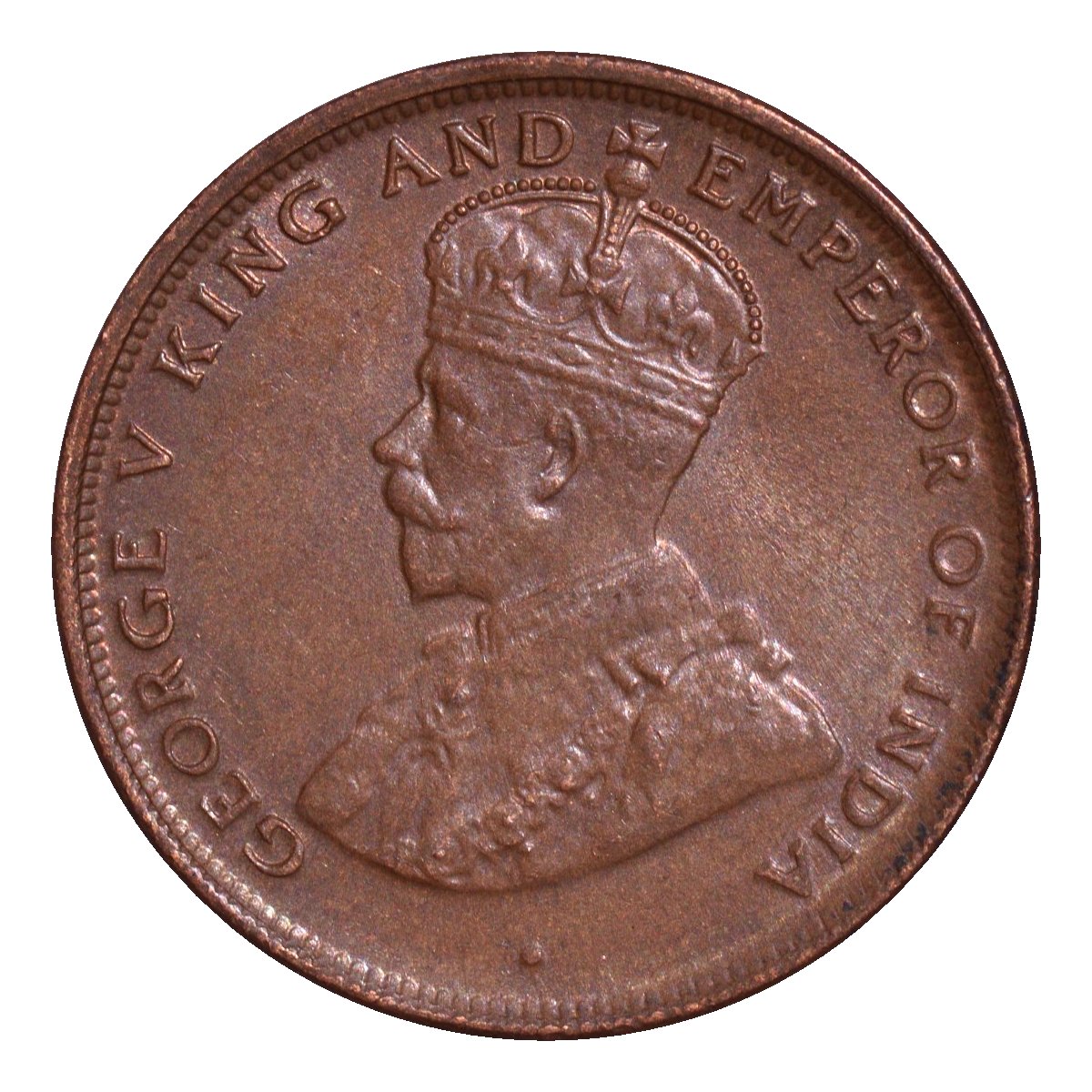
George V — Mackennal
BM on truncation
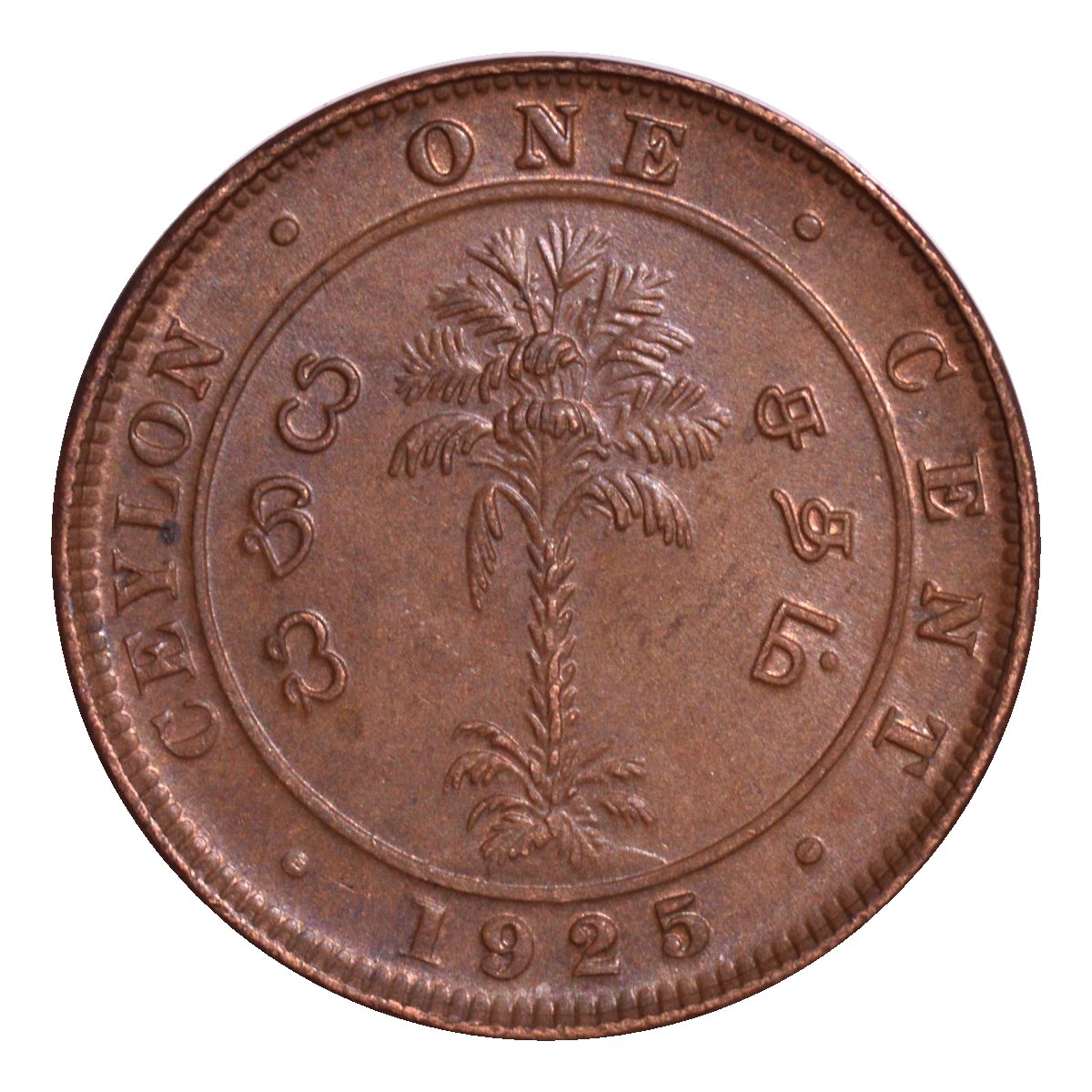
Talipot Palm
trilingual legends
Denomination
1 Cent
Country
Ceylon (British Colony)
Year
1925
Monarch
George V
Catalogue
KM# 107 · Pridmore 201
Metal
Copper (AE)
Diameter
22.5 mm
Weight
4.72 g
Edge
Plain (smooth)
Die Axis
0° (medal orientation)
Mint
The Mint, Birmingham Ltd.
Mintage
7,490,000
History & Context
Design
The Series
Mint & Production
Valuation
Collecting Notes
| Section | Topic | Notes | ||||||||||||||||||||||||||||||||||||||||||||
|---|---|---|---|---|---|---|---|---|---|---|---|---|---|---|---|---|---|---|---|---|---|---|---|---|---|---|---|---|---|---|---|---|---|---|---|---|---|---|---|---|---|---|---|---|---|---|
| History & Context | ||||||||||||||||||||||||||||||||||||||||||||||
| History | Ceylon in 1925 | In 1925 Ceylon was a British Crown Colony, a status it would hold until independence in 1948. The island's economy revolved around tea and rubber — commodities that had made it one of the Empire's most prosperous tropical possessions. George V had been on the throne since 1910 and was in the middle of his long, stable reign; 1925 was a year of relative peacetime normality between the hardships of the First World War and the Depression that would follow the Wall Street Crash of 1929. The one cent coin circulated widely among the island's working population, used for the smallest daily transactions in markets and bazaars across Colombo, Kandy, Galle, and the plantation districts. Ceylon's monetary system was based on the rupee, divided into 100 cents — a fully decimal arrangement established by Order in Council dated 18 June 1869, declared legal tender from 1 January 1872. The sterling exchange rate was fixed at approximately ten rupees to the pound, making the one cent worth roughly one-tenth of a farthing in English money — the smallest denomination in everyday use. | ||||||||||||||||||||||||||||||||||||||||||||
| History | The Cent in Daily Commerce |
At the prevailing wage levels and commodity prices of mid-1920s Ceylon, a single cent could purchase a small quantity of betel leaf, a handful of salt, or a single plantain. The denomination was the lowest in the decimal series and circulated in vast numbers — the 1925 mintage of 7,490,000 was the largest of any year in the entire George V one cent series, reflecting strong commercial demand in the mid-decade period of relative economic stability. | ||||||||||||||||||||||||||||||||||||||||||||
| History | The Interwar Period |
The mid-1920s represented a distinct monetary moment for the Ceylon one cent. The post-war period had seen significant inflation across British colonial currencies, and the Strachey Commission of 1920 had examined Ceylon's monetary arrangements. By 1925 the currency had stabilised; the large mintage of 7,490,000 cents for this year reflects the States's confidence in normal commercial conditions and a genuine need for small-denomination copper across the island. Compare this with the later 1929 mintage, which was much smaller as demand contracted during the early Depression years. The 1925 issue thus represents the peak of George V era cent production. | ||||||||||||||||||||||||||||||||||||||||||||
| Design | ||||||||||||||||||||||||||||||||||||||||||||||
| Design | Obverse — Mackennal Portrait |
The obverse carries the crowned bust of George V facing left, in high relief. The portrait was modelled by the Australian-born sculptor Sir Edgar Bertram Mackennal KCVO RA (1863–1931) — the first Australian to be elected a Royal Academician and the first to be knighted. Mackennal was given two sittings with the King in early 1910 and developed a portrait of quiet authority that appeared on British and Commonwealth coinage from 1911. Mackennal's initials BM are incuse on the truncation of the King's shoulder, visible on well-preserved examples under close examination. This is the primary attribution mark for the obverse designer. The legend reads GEORGE V KING AND EMPEROR OF INDIA, broken by the crown at the top. | ||||||||||||||||||||||||||||||||||||||||||||
| Design | Two Portrait Varieties |
Two versions of the Mackennal portrait were used across the KM#107 series. The first — used through approximately 1922 to 1925 — shows the King's bust in relatively high relief. A revised, slightly lower-relief portrait was introduced around 1926. Collectors examining 1925 pieces against later issues will note a difference in the depth of the modelling, particularly around the crown jewels and the King's features. The relief transition is not precisely dated in all catalogue sources — some list both relief varieties for certain years. For the 1925 issue, the high-relief first portrait is standard. The lakdiva.org.lk reference notes that no marks were placed on the punches supplied to contractors during 1926–1929, confirming the 1925 as still within the first portrait era. | ||||||||||||||||||||||||||||||||||||||||||||
| Design | Reverse — Talipot Palm |
The reverse continues the design established for all George V Ceylon copper denominations: a Talipot palm (Corypha umbraculifera) at centre within a plain inner circle. The denomination in three scripts surrounds the palm: CEYLON · ONE · CENT in English above the inner circle; සතය (sata, Sinhala) to the left within the inner circle; சதம் (satam, Tamil) to the right. The date 1925 appears below the inner circle within the outer annulus. This distinctive design, unique to Ceylon's coinage, had been in use since the decimal cent series was established in 1870 under Victoria. The Talipot palm is native to Ceylon and southern India, growing to over 25 metres. Its colossal terminal flower head — borne only once in the tree's lifetime of 40–80 years — was a marvel to early botanists. Its vast leaves were used historically for manuscripts, umbrellas, and fans. Its selection as the reverse motif in 1870 was a conscious reference to one of the island's most distinctive natural features. | ||||||||||||||||||||||||||||||||||||||||||||
| Design | The Trilingual Legend |
The use of English, Sinhala, and Tamil on the reverse acknowledges Ceylon's three principal language communities: Sinhalese (approximately 66% of the population in 1921), Tamils (25%), and smaller communities of Moors, Burghers, and others. The trilingual format had been a feature of Ceylon's copper coinage since its introduction under Victoria — a practical recognition that the coin needed to be legible to all its users, regardless of their first language. | ||||||||||||||||||||||||||||||||||||||||||||
| Design | Physical Character | At 22.5 mm and 4.72 g, the 1925 one cent is a medium-sized copper coin — slightly smaller than a modern British penny. The plain (smooth) edge and medal orientation (0° die axis) are standard for the series. The relatively high-relief obverse portrait means that the highest points — the crown jewels, the King's cheekbones, and the details of his collar — wear first; the reverse Talipot palm fronds and the Sinhala and Tamil denomination scripts are the next areas to show circulation wear. | ||||||||||||||||||||||||||||||||||||||||||||
| The George V One Cent Series — KM#107 Mintage by Year | ||||||||||||||||||||||||||||||||||||||||||||||
| Series | Complete Year Listing |
|
||||||||||||||||||||||||||||||||||||||||||||
| Mint & Production | ||||||||||||||||||||||||||||||||||||||||||||||
| Mint | The Mint, Birmingham Ltd. |
The 1925 one cent was struck at The Mint, Birmingham Limited — the successor to the Heaton firm and one of the most important private mints in the world, with a history tracing back to Matthew Boulton's Soho Mint and Ralph Heaton's company of 1794. By 1925 the Birmingham Mint had absorbed King's Norton Metal Company and operated as a major contractor for the Royal Mint, producing colonial coinage for numerous British territories. The working dies were designed by the Royal Mint in London; the actual striking was done in Birmingham. No mint mark appears on the 1925 coins — an unmarked coin does not mean Royal Mint London. The Lakdiva reference specifically confirms: "No marks were placed upon the punches supplied to the contractors by the Royal Mint during 1926–1929." The 1925 pieces, struck before that policy took formal effect, are also unmarked but are attributed to Birmingham on the basis of Royal Mint contract records and Pridmore's research. | ||||||||||||||||||||||||||||||||||||||||||||
| Mint | Striking Quality | Birmingham-struck Ceylon cents of the 1920s are generally well produced — the dies were supplied from the Royal Mint's die preparation facility and the Birmingham Mint's press quality was high. Typical uncirculated examples show a sharp, well-centred strike with full definition on the Mackennal portrait and clear Talipot palm fronds. The copper used in this period was of high purity, giving survivors a warm reddish-brown tone that deepens with age. The high mintage of 7,490,000 pieces means the dies were used extensively. Late-die-state coins show minor flatness on the highest relief points of the obverse; early-die-state pieces are correspondingly sharper and command a premium in grades above MS-63. | ||||||||||||||||||||||||||||||||||||||||||||
| Mint | Why Birmingham, not London? |
The Royal Mint in London was the central authority for die preparation and quality control, but private mints — principally Heaton/Birmingham — had supplied a significant share of British colonial copper coinage since the mid-nineteenth century. Birmingham's proximity to the copper and brass industries of the English Midlands gave it a commercial advantage in producing large volumes of base-metal coinage. Ceylon's copper cents had been struck in Birmingham for much of the Victoria and Edward VII periods as well, so the arrangement in 1925 followed a well-established tradition. | ||||||||||||||||||||||||||||||||||||||||||||
| Valuation | ||||||||||||||||||||||||||||||||||||||||||||||
| Value | Market Overview | The 1925 Ceylon one cent is the most common year of the George V series — its mintage of 7,490,000 is roughly double that of the next largest year — and this is reflected in its values. In average circulated grades it is among the easiest George V Ceylon cents to find and one of the least expensive. However, this abundance at low grades does not extend upward: truly choice uncirculated examples with original colour are scarce regardless of date in this series, and high-grade certified pieces command meaningful premiums. The 1929 issue (mintage 1,008,000) is the scarcest date and typically commands 3–5× the premium of the 1925 in comparable grade. Collectors building a date run of the KM#107 series should acquire the 1919 and 1929 dates early — the 1925 can always be found. | ||||||||||||||||||||||||||||||||||||||||||||
| Value | Price Guide (approximate, 2025–26) |
|
||||||||||||||||||||||||||||||||||||||||||||
| Value | Colour & Premium | As with all copper coins, colour designation for uncirculated pieces significantly affects value. Brown (BN) examples are the most common survivors; Red-Brown (RB) pieces showing a mix of original red and natural toning are desirable; full Red (RD) examples with no spots, cleaning, or environmental damage are genuinely rare for this issue and command a substantial premium. The 1925 cent's large mintage means more total BN survivors, but the ratio of RD survivors to total mintage is no better than for lower-mintage years. | ||||||||||||||||||||||||||||||||||||||||||||
| Value | Relative Value Within Series |
Within the KM#107 date run, the 1925 is the most affordable year in low grades. For collectors seeking the best value for money, an EF or AU 1925 will cost less than the equivalent grade in any other year. For those building a high-grade set, the 1925 in MS-64 RB or MS-65 RB is comparably priced with the 1922 and 1926 dates, and meaningfully cheaper than the 1919 and 1929 in the same grade. | ||||||||||||||||||||||||||||||||||||||||||||
| Collecting Notes | ||||||||||||||||||||||||||||||||||||||||||||||
| Collect | What to Look For | When assessing a 1925 one cent, check the following in order: (1) the BM initials on the truncation of the King's left shoulder — these are the primary attribution mark and their sharpness indicates how fresh the die was; (2) the palm fronds of the Talipot reverse — their individual definition distinguishes EF from VF; (3) the Sinhala and Tamil denomination scripts within the inner circle — these delicate letterforms wear quickly and their clarity confirms the grade. On uncirculated examples, examine the luster under a light source: genuine original lustre flows in cartwheel patterns; artificial brightening shows directional polish marks. | ||||||||||||||||||||||||||||||||||||||||||||
| Collect | Problems to Avoid | The most common problems with George V Ceylon cents are: (1) Cleaning — harsh cleaning removes original patina and leaves hairlines or a bright, unnatural surface; under a loupe, parallel scratches in the fields are diagnostic; (2) Environmental damage — green verdigris, black sulphide spotting, and edge corrosion from bulk storage are frequently seen; (3) Artificial toning — some sellers chemically tone cleaned coins to simulate original brown patina; the tone will often be too uniform or sit on the high points rather than in the recesses. For certified coins, NGC and PCGS both offer "details" grades for cleaned or damaged pieces; avoid these for premium collection purposes. | ||||||||||||||||||||||||||||||||||||||||||||
| Collect | Collection Contexts | The 1925 Ceylon one cent fits naturally into several collecting themes: a complete date set of KM#107 (ten dates, 1912–1929); a George V Commonwealth copper type set; a Ceylon / Sri Lanka country collection; or a Talipot palm reverse collection covering all denominations and reigns (Victoria through George VI) that used this distinctive motif. As the highest-mintage year, the 1925 is the natural starting point for any of these sets — the date least likely to present a budget challenge. | ||||||||||||||||||||||||||||||||||||||||||||
| Collect | Related Coins | The closest companions to the 1925 one cent are the 1925 Ceylon half cent (KM#108 — same obverse portrait, Talipot reverse, 18.5 mm, struck at The Mint Birmingham) and the complete KM#107 date run from 1912 to 1929. The successor series — George VI one cent (KM#111, 1937–1940; KM#111a, 1942–1945) — carries the Percy Metcalfe portrait and a lower-relief Talipot reverse. The Victorian predecessors — KM#92 (1870–1901) under the L. C. Wyon Young Head and Old Head — and the Edward VII one cent (KM#102, 1904–1910, de Saulles portrait) complete the historical lineage of the denomination. | ||||||||||||||||||||||||||||||||||||||||||||
At 7,490,000 pieces the 1925 one cent is the single most numerous coin struck for Ceylon under George V — more common in circulated grades than any other date, yet genuinely elusive in choice uncirculated condition with original colour. It is a coin that rewards the patient hunter rather than the casual buyer.
Sources: Pridmore, F. The Coins of the British Commonwealth — Part 4: India (1975) · Robert Harris (1970), with reference to Royal Mint Annual Reports · coins.lakdiva.org.lk — George V One Cent series · KM World Coins catalogue, KM#107 · Numista catalogue entry #1275 · uCoin.net — 1 cent 1912–1929 series values · eBay completed sales 2023–2026 · MA-Shops / Podlaski Gabinet listings (NGC MS65 RB adjacent years) · colleconline.com — George V 1925 one cent specifications