May 29, 2026
Ceylon ¼ Cent, 1901 Last Copper Coin of Victoria's Reign — Calcutta Mint
KM# 90 · Copper · 14.3 mm · 1.18 g · Plain edge · Mintage: 216,000
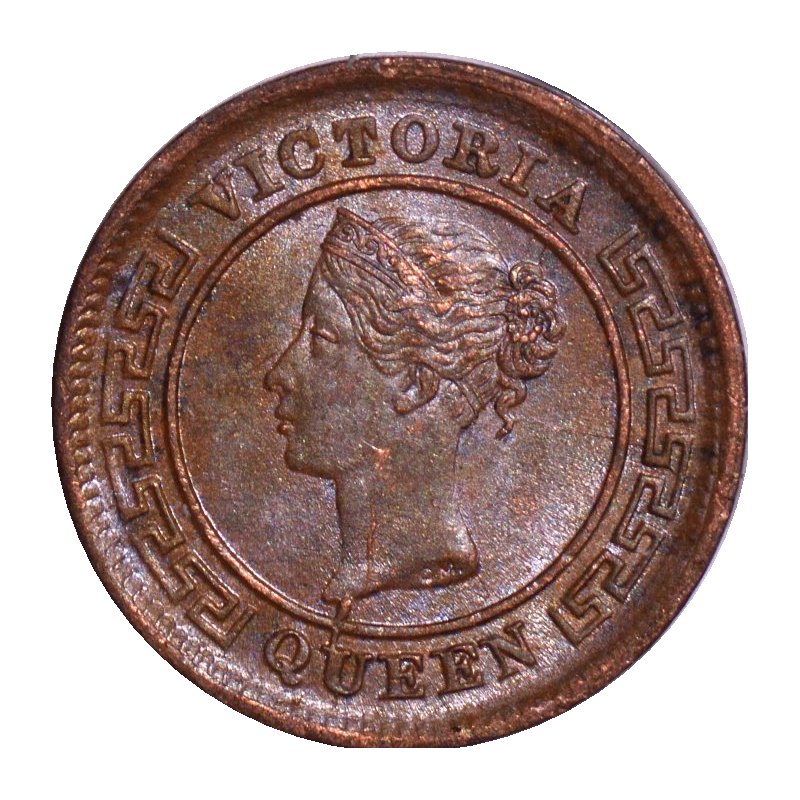
Victoria — Old Head
left-facing bust
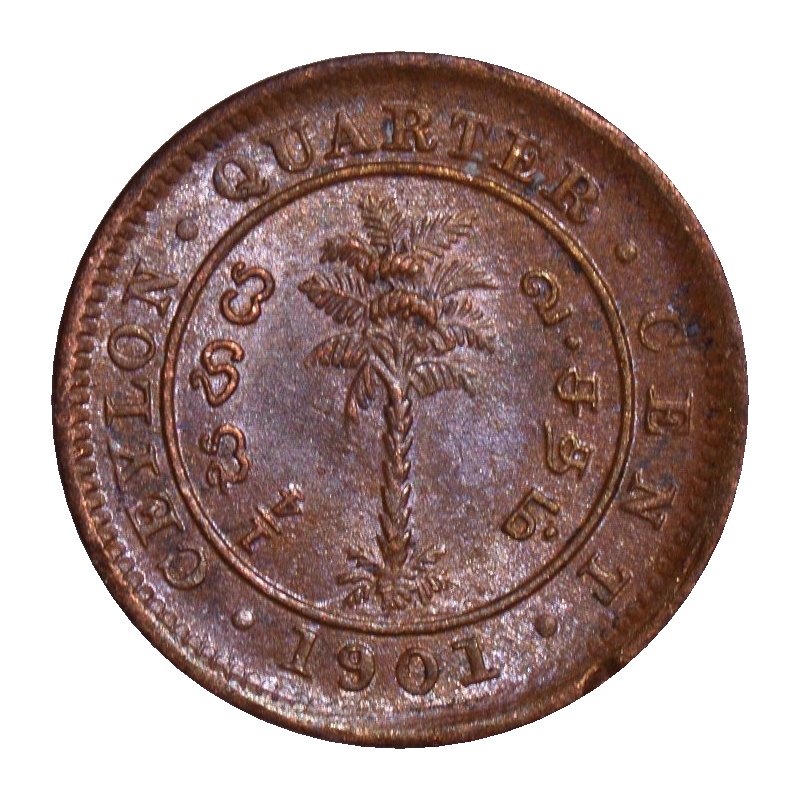
Talipot Palm
trilingual legends
Denomination
¼ Cent
Country
Ceylon (British Colony)
Year
1901
Monarch
Queen Victoria
Catalogue
KM# 90 · Pridmore 200
Metal
Copper (AE)
Diameter
14.3 mm
Weight
1.18 g
Edge
Plain
Die Axis
0° (medal orientation)
Mint
Calcutta (India Government Mint)
Mintage
216,000
History & Context
Design
The Series
Mint & Production
Valuation
Collecting Notes
| Section | Topic | Notes | ||||||||||||||||||||||||||||||||||||
|---|---|---|---|---|---|---|---|---|---|---|---|---|---|---|---|---|---|---|---|---|---|---|---|---|---|---|---|---|---|---|---|---|---|---|---|---|---|---|
| History & Context | ||||||||||||||||||||||||||||||||||||||
| History | Ceylon under British Rule |
Ceylon (present-day Sri Lanka) became a British Crown Colony in 1815 following the Kandyan Convention. It had previously been a Dutch possession, and before that the coastal regions were held by Portugal. By the late nineteenth century it was the heart of the British Empire's tea and rubber industries. A decimal currency system — rupees and cents — was established by Order in Council dated 18 June 1869, declared legal tender from 1 January 1872. The Sterling exchange rate was set at ten rupees to one pound, giving the quarter cent a notional value of £0.000625 — about one-quarter of an English farthing. It was the smallest denomination in regular use. | ||||||||||||||||||||||||||||||||||||
| History | The Quarter Cent in Daily Life |
To a modern observer the quarter cent seems an absurdly small unit of value, yet it had genuine purchasing power in late Victorian Ceylon — sufficient, at prevailing wages and prices, to buy a handful of betel or a small quantity of salt in the bazaar. Ceylon's lowest-denomination copper coins circulated intensively among the island's agricultural and market-trading population, passing through thousands of hands before wearing smooth. For this reason, uncirculated survivors are genuinely scarce. | ||||||||||||||||||||||||||||||||||||
| History | The Last Year: 1901 |
Queen Victoria died on 22 January 1901. The 1901 quarter cent is the final issue of the Victoria series for Ceylon — it was the very last year in which her portrait could legally appear on a new coin. Whether the coin was struck before or after her death on 22 January is not definitively established, but the Calcutta Mint routinely struck dated coin orders in batches and it is plausible that at least some of the 216,000 pieces were coined after her passing. Either way, the 1901 date gives the coin a powerful historical resonance as a numismatic full stop on sixty-four years of Victorian Ceylon coinage. Victoria's reign lasted from 20 June 1837 to 22 January 1901 — 63 years and 216 days. The quarter cent series for Ceylon spanned 1870 to 1901 under her portrait, then continued under Edward VII (1904 only) before the denomination was demonetised by Order in Council of 18 October 1909 with effect from 1 July 1910. | ||||||||||||||||||||||||||||||||||||
| Design | ||||||||||||||||||||||||||||||||||||||
| Design | Obverse | The obverse has a dexter coroneted bust of Queen Victoria and is attributed to engraver Leonard Charles Wyon. The legend reads VICTORIA QUEEN, broken by a fret border. A dot circle runs within the raised rim. The portrait replaced the earlier Young Head design that had appeared on Ceylon coins from 1870. | ||||||||||||||||||||||||||||||||||||
| Design | Reverse | The distinctive Talipot palm (Corypha umbraculifera) occupies the centre of the reverse — a design unique to Ceylon's coinage and found on no other British colonial series of the period. The denomination appears in three scripts: QUARTER CENT in English above; ¼ සතය (sata) in Sinhala on the left; ¼ சதம் (satam) in Tamil on the right. The year 1901 appears below within the annulus, with CEYLON completing the legend. The Talipot palm is native to Ceylon and India, growing to over 25 metres. It flowers only once in its lifetime — after 40 to 80 years — then dies. Its enormous leaves were historically used for manuscripts, umbrellas, and thatch. Its selection as the reverse motif for Ceylon's coinage in 1870 was a deliberate reference to the island's distinctive natural heritage. | ||||||||||||||||||||||||||||||||||||
| Design | The Trilingual Legend |
The use of English, Sinhala, and Tamil on the reverse — all three principal languages of Ceylon — is a notable feature of the series and reflects the island's complex linguistic and ethnic composition. Ceylon's population in 1901 comprised Sinhalese (approximately 66%), Tamils (25%), and smaller communities of Moors, Burghers, and others. The trilingual design was a pragmatic acknowledgement that the coin needed to be readable by all its users. | ||||||||||||||||||||||||||||||||||||
| Design | Physical Character | At 14.3 mm in diameter and 1.18 g in weight, the quarter cent is a very small coin — smaller than a modern British five-pence piece. It is struck in copper with a plain (smooth) edge and medal orientation (0° die axis). The relief on both sides is relatively low, suited to the practical demands of commercial coinage produced in large numbers for tropical circulation. On well-preserved examples, the Talipot palm and the trilingual scripts are crisply rendered; on circulated pieces, the fine Sinhala and Tamil letterforms often wear first. | ||||||||||||||||||||||||||||||||||||
| The Victoria Quarter Cent Series (Ceylon) — Complete Listing | ||||||||||||||||||||||||||||||||||||||
| Series | 1870 — Young Head | First issue of the decimal Ceylon quarter cent. Obverse: the Young Head of Victoria, left, coronet ornamented with scrolls; legend VICTORIA QUEEN; engraver's initials C.M. Angus on the truncation. Reverse: Talipot palm, trilingual denomination, 1870. The Young Head was designed by William Wyon RA (1795–1851); the specific engraving of the Ceylon issue was by C. M. Angus of the Royal Mint. Mintage and diameter consistent across the 1870–1892 Young Head run. | ||||||||||||||||||||||||||||||||||||
| Series | 1872, 1882, 1890, 1892 — Young Head continues |
Further Young Head issues struck in these years, with minor die variations documented by collectors. The Talipot reverse design remained unchanged throughout. The Young Head series closed with the 1892 issue; the introduction of the Old Head portrait coincided with the wider Empire-wide coinage update of 1892–1893. Die cracks, repunched letters, spacing variations in dates and legends, and different font forms are documented across the Young Head quarter cent issues — a rich field for variety collectors. | ||||||||||||||||||||||||||||||||||||
| Series | 1892 — Old Head introduced |
The Old Head (Veiled Head) portrait appears for the first time on Ceylon copper. Modelled by Sir Thomas Brock; dies engraved by George William de Saulles. All subsequent Victoria quarter cents use this portrait. | ||||||||||||||||||||||||||||||||||||
| Series | 1898 | Old Head issue continuing the series. A Proof of Pridmore 201 (1898) is listed in some catalogues, but the Dick Ford collection — sold at Taisei-Baldwin-Gillio Auctions #19, Ceylon, 23 February 1995, Singapore — records that this proof does not exist. | ||||||||||||||||||||||||||||||||||||
| Series | 1901 — This coin | Final Victoria issue. Old Head obverse; Talipot palm reverse; date 1901. Struck at Calcutta Mint (India Government Mint). Mintage 216,000. The last quarter cent to bear Victoria's portrait — and the last coin of any denomination to do so for Ceylon. Pridmore 200; KM# 90. The next quarter cent would not appear until 1904, bearing the newly designed Edward VII portrait by de Saulles with his DES initials. The Edward VII quarter cent was struck only in 1904 and then discontinued: the denomination was demonetised in 1910. | ||||||||||||||||||||||||||||||||||||
| Mint & Production | ||||||||||||||||||||||||||||||||||||||
| Mint | Calcutta Mint | The 1901 quarter cent was struck at the India Government Mint, Calcutta (now Kolkata) — not at the Royal Mint in London. By this period the Calcutta Mint was the standard production facility for the lower-denomination copper coinage of Ceylon, with the Royal Mint in London producing the working dies and punches and the Calcutta Mint striking the coins from them. Calcutta was geographically far closer to Ceylon than London and could respond more rapidly to the island's currency needs. The shift of Ceylon's copper coinage production to Calcutta had taken place progressively from the 1870s. No mint mark appears on the coins — the Calcutta origin is established through Royal Mint Annual Reports and Pridmore's catalogue research rather than from any mark on the coin itself. | ||||||||||||||||||||||||||||||||||||
| Mint | Mintage: 216,000 | A mintage of 216,000 pieces is modest by the standards of British colonial copper coinage of the period. For comparison, the Ceylon one cent of 1901 had a mintage of approximately 1,008,000. The quarter cent's smaller mintage reflects its marginal role in commerce — useful but not indispensable — and explains why survivors in high grade are considerably rarer than the one cent of the same year. The eBay listing for a 1901 quarter cent (as of 2024–25) cited a mintage of 216,000 from KM# 90. Pridmore (1961) gives figures consistent with this. Some secondary sources estimate the total differently based on which Royal Mint Annual Report is consulted. | ||||||||||||||||||||||||||||||||||||
| Mint | Indian Mint Restrikes |
A number of Victoria Ceylon copper coins were restruck in precious metal at Indian mints — gold and silver versions produced for collectors rather than for circulation. These are listed for various years of the Young Head series. The 1901 Old Head quarter cent is not currently known in a precious metal restrike, though one or two such pieces for this date may exist in private collections. Compare the Edward VII quarter cent (1904 only), for which a gold pattern is recorded — listed separately on Numista as a gold pattern piece. | ||||||||||||||||||||||||||||||||||||
| Valuation | ||||||||||||||||||||||||||||||||||||||
| Value | Market Overview | The 1901 Ceylon quarter cent is a modestly collected coin in average circulated grades — common enough at VG to VF that a collector building a type set can acquire one readily for a few pounds or dollars. However, specimens in EF and above are meaningfully scarcer, and certified MS examples command a significant premium. The coin's status as the last Victoria issue for Ceylon lends it a collector story that supports values above those of mid-series dates. | ||||||||||||||||||||||||||||||||||||
| Value | Price Guide (approximate, USD) |
|
||||||||||||||||||||||||||||||||||||
| Value | Colour Premium (Uncirculated) |
For uncirculated copper coins, colour designation significantly affects value. The three standard colour grades for copper are Brown (BN), Red-Brown (RB), and Red (RD). A 1901 quarter cent in MS-63 BN might fetch $80–$120, while the same coin in MS-63 RD could reach $200+. Full red examples with no spots or cleaning are rare for this issue, as the small Calcutta Mint coins were often stored in bulk and subject to atmospheric toning. | ||||||||||||||||||||||||||||||||||||
| Collecting Notes | ||||||||||||||||||||||||||||||||||||||
| Collect | What to Look For | When examining a 1901 quarter cent, prioritise sharpness of the Talipot palm fronds on the reverse and clarity of the trilingual denomination — these areas wear first and their sharpness is the best guide to grade on this type. On the obverse, the detail of Victoria's veil and crown jewels distinguishes EF from VF. The date digits should be well-spaced and fully legible; die cracks are documented on this series and do not significantly affect value, but they confirm originality. | ||||||||||||||||||||||||||||||||||||
| Collect | Problems to Avoid | Cleaned coins are common in the Ceylon copper series. Cleaning removes natural patina, leaving a harsh, bright, or hairlined surface that is easy to spot under magnification but sometimes missed in casual inspection. Original untouched coins have a warm, even brown tone; artificially brightened pieces show unnatural colour and microscopic parallel hairlines. Environmental damage — corrosion spots, green verdigris, edge nicks from bulk storage — is also frequently seen and substantially reduces value. For uncirculated examples, check for original red under the Talipot fronds and in the recesses of the obverse legend — areas that collectors and cleaners most often miss. Certified (slabbed) coins from NGC or PCGS remove the guesswork on grade and authenticity. | ||||||||||||||||||||||||||||||||||||
| Collect | In a Collection Context |
The 1901 quarter cent fits naturally into several collecting themes: a date set of Victoria Ceylon copper (1870–1901); a type set of British colonial quarter-cent denominations; a last-year-of-issue collection of Victorian colonial coinage; or a Ceylon / Sri Lanka country collection. Its role as the final coin of a 64-year reign makes it a natural set-closer, and collectors who build the complete Victoria Ceylon series — eight denominations across six dates — regard the 1901 quarter cent as the final piece. | ||||||||||||||||||||||||||||||||||||
| Collect | Related Coins | The closest related pieces are the 1901 Ceylon half cent (KM# 91) and 1901 Ceylon one cent (KM# 92) — both also last-year Victoria issues sharing the Old Head obverse and Talipot reverse format, and struck at the same Calcutta Mint in the same year. The 1904 Edward VII quarter cent (KM# 100, de Saulles portrait, DES below truncation, right-facing bust) is the direct successor and closes the denomination's history. | ||||||||||||||||||||||||||||||||||||
The 1901 quarter cent is the numismatic full stop on sixty-four years of Victoria's image on Ceylon's smallest coin. At 14.3 mm across, it is easy to overlook — but in the hand, its tiny Talipot palm and three-language inscription tell a bigger story than its weight of 1.18 grams might suggest.
Sources: Pridmore, F. The Coins of the British Commonwealth — Part 4: India (1975) · KM World Coins catalogue · coins.lakdiva.org.lk (Lakdiva coin reference) · Numista catalogue entry #12111 · eBay sold listings 2023–2025 · MA-Shops / Pegasus Auctions listing (NGC MS65RB, ~USD $259) · Royal Mint Annual Reports · Dick Ford collection catalogue, Taisei-Baldwin-Gillio Auctions #19, Singapore, 1995